

Stage 1. Set the Vision and Budget (D-360 to D-270)
Wedding Planning: Where Do You Even Start?

The ring is on, the photos are posted, and then reality sets in. "So... what do we do first?" Venue, photographer, guest list, registry, honeymoon. You've never done any of this before, and suddenly everything needs to happen at once. You search online for answers, but nothing quite fits your situation.
Nearly half of all couples go over their wedding budget, and the most common reason is not having a clear order of operations. The average U.S. wedding costs around $35,000, with 50 to 60 decisions to make over roughly 12 months of planning. Get the order right, and half the stress disappears. From your first venue tour to your thank-you cards, here's the entire wedding planning journey in 9 stages.
Stage 1. Set the Vision and Budget (D-360 to D-270)
Before you book anything, sit down together and align on the big picture. How many guests? Indoor or outdoor? Formal or laid-back? And most importantly, what's your total budget? Having an honest conversation about finances early on prevents surprises later. This is also a great time to talk with both families about whether they plan to contribute, and what that looks like.
Meeting the Families: A Practical Guide for Couples
Wedding Gifts and Registry Guide
Stage 2. Book the Venue (D-360 to D-240)
The venue is the anchor for everything else. Your date and location determine when to hire vendors, when to send invitations, and when to plan the honeymoon. Popular venues book out 12 to 18 months in advance, so this is the very first thing to lock down.
Friday evening and Sunday ceremonies can be 20 to 40% cheaper than Saturday. The same venue can differ by thousands of dollars depending on the day and time slot.
Venue Tour Guide: What to Ask On-Site
Choosing Your Wedding Date: Season, Day, and Time Slot Costs
Hotel Wedding Guide
Outdoor Wedding Guide
Stage 3. Hire Your Key Vendors (D-240 to D-180)
Photographer, caterer, florist, DJ or band. These are the vendors that book up fast and shape the feel of your day. The final cost is typically 1.3 to 1.5 times the initial quote once add-ons like extra hours, travel fees, and premium packages are factored in. Get detailed proposals and ask about every possible extra before signing a contract.
Photography and Attire: How to Read Quotes and Negotiate
13 Hidden Wedding Costs You Might Miss
Stage 4. Lock Down Your Budget (D-240 to Ongoing)
Nearly 50% of couples who start without a detailed budget end up overspending, by an average of $7,000 or more. Once your venue and key vendors are booked, allocate the remaining budget by category. Variable costs like catering and favors are best adjusted once the guest count takes shape.
[!PUDDING]
Budget Enter your total budget and AI allocates it across 50 items automatically. Log expenses and your remaining budget updates in real time. Manage it together with your partner.
Start Budget Management →
Wedding Cost Breakdown: Average Costs by Category
Budget Allocation Guide: How to Distribute Your Total Budget
10 Strategies to Save on Your Wedding
Stage 5. Manage Your Timeline (D-240 to Ongoing)
Venue tours, vendor meetings, dress fittings, save-the-dates, rehearsal dinner. There are 50 to 60 tasks in a typical wedding plan, and they all need to happen in the right order. Try to track them in your head and things start slipping through the cracks.
[!PUDDING]
Schedule Enter your wedding date and 50 to 60 events are placed on a timeline automatically. Over 150 sequencing rules keep everything in order, so nothing gets missed or out of sequence.
Start Schedule Management →
12-Month Wedding Timeline
Schedule Guide: Auto-Generated Events from Your Wedding Date
Stage 6. Ceremony Script and Speeches (D-120 to D-30)
Will you write your own vows? Who's officiating? Is there a reading? These details shape the most memorable part of your wedding. If you're having a friend or family member officiate, they'll need time to prepare. And don't forget the toasts: best man, maid of honor, and parent speeches all benefit from a little advance planning.
[!PUDDING]
Script Choose your ceremony style and AI generates MC scripts, officiant remarks, vows, toasts, and parent blessings automatically. Pick the tone (formal, casual, or heartfelt) and length (short, standard, or long), edit the result, and download as PDF.
Create a Script →
Wedding Script Guide: Ceremony Flow and Sample Lines
MC Script Examples
Officiant Remarks and Alternatives
Writing Your Own Vows
Toast Examples by Relationship
Stage 7. Send Invitations (D-56 to D-42)
Six to eight weeks before the ceremony is the sweet spot for mailing invitations. Save-the-dates should go out much earlier, around six to eight months before. A combination of printed invitations for close family and digital invitations for wider circles is the most practical approach today.
[!PUDDING]
Invitation Choose from 22 templates and 12 color themes. Enter your details and photos, and 9 sections are auto-generated including greeting, venue info, and directions. Track who opened your invitation in real time.
Create an Invitation →
Invitation Guide: Print vs Digital and Sending Strategy
50+ Invitation Wording Examples by Occasion
Stage 8. Guest Management and RSVPs (D-42 to D-7)
Your guest count drives nearly every major cost: catering, rentals, favors, and seating. At roughly $280 per guest on average, the difference between 100 and 200 guests is significant. The challenge? Around 10 to 20% of people who RSVP "yes" may not show up on the day.
[!PUDDING]
Guest Management Register your guest list and attendance rates are predicted automatically based on relationship and age. Expected catering costs and gift amounts are calculated together, giving you the final headcount to report to your venue.
Start Guest Management →[!PUDDING]
RSVP Your invitation includes an RSVP link so guests respond directly. Send reminders to non-responders, and track responses in real time.
Manage RSVPs →
Guest Management Guide: From List Building to Attendance Prediction
RSVP Guide: Predictions and Reminders
Gift Amounts by Relationship
Stage 9-1. Wedding Day (D-Day)
The three biggest surprises on the day: check-in table congestion (assign at least 3 to 4 helpers), ceremony timing overruns (do a full rehearsal by D-3), and family photo confusion (share the shot list with your photographer in advance). All of these are completely preventable with a little preparation.
[!PUDDING]
Reception Desk Share one link with your check-in volunteers and you're set. No app install needed. Run two desks simultaneously for each family side. Pre-registered guests auto-complete by name, with real-time statistics.
Manage Reception Desk →
Reception Desk Guide: Setup, Check-in, and Settlement
D-Day Checklist: From the Night Before to After the Ceremony
Stage 9-2. Thank-Yous and Wrap-Up (D+1 to D+30)
The wedding is over, but you're not quite done. Thank-you cards, final vendor payments, gift tracking, and filing for your marriage license (if you haven't already) all need to happen in the weeks that follow.
File your marriage license promptly. Many states require it within 30 to 60 days of the ceremony, and you'll need it to update your name, insurance, and tax filing status.
[!PUDDING]
Gift Settlement Cash gifts and digital transfers recorded at the reception desk are automatically combined. Separate settlement for each family side, per-plate cost calculations, and per-guest gift breakdowns are all handled in one place.
Manage Settlement →
Gift Settlement Guide: Combining Cash and Transfers
Return Gift Guide: Budget-Friendly Options and Timing
The Full Picture: Pudding at Every Stage
All features support partner invites so you can manage everything together.
Where Are You in the Journey?
Related Posts
View List
The Right Order Saves You Money and Stress
18 Months to D-Day: Your Complete Wedding Planning Timeline
The most common thing couples share after the wedding? "I wish we had known sooner — we would have had so much more breathing room." Popular Saturday evening venues in major US cities book up 12 to…
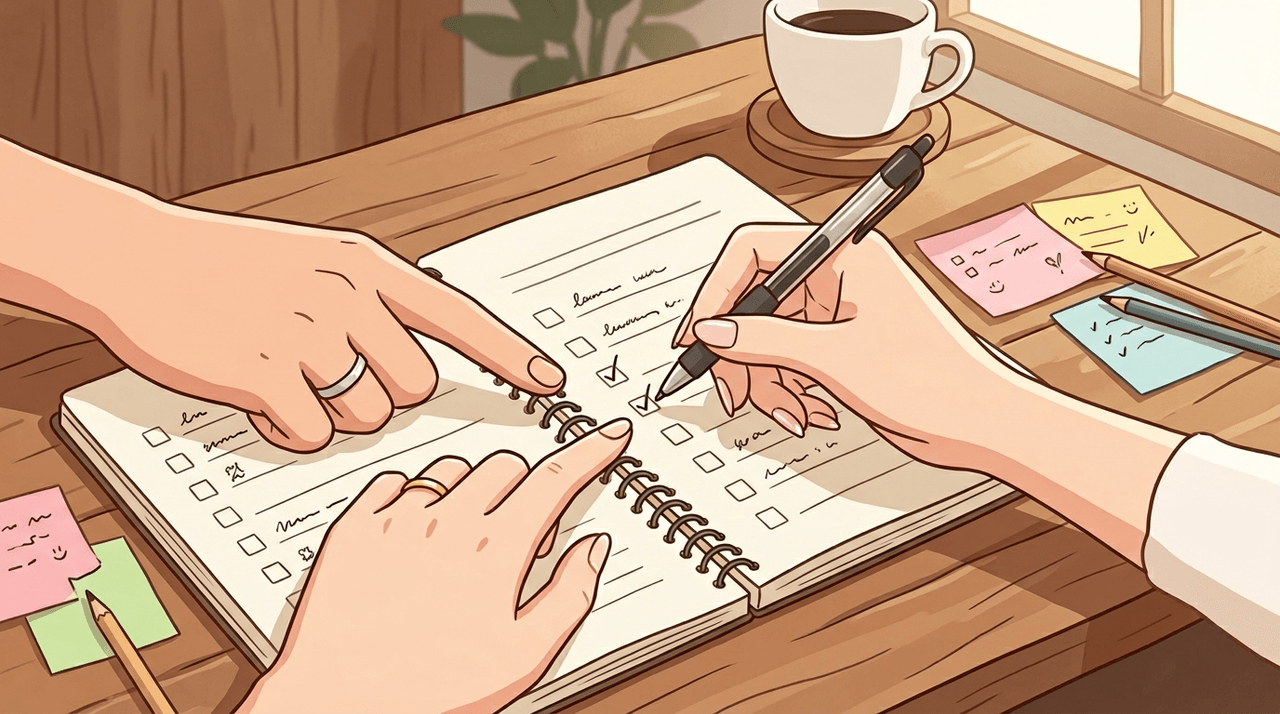
Stage 1: Budget · Venue · Date Confirmed
Wedding Planning Checklist: Every Detail You Might Miss
Studies show that over half of all couples end up spending more than they planned — knowing the full picture in advance makes it much easier to budget efficiently.
Create Your Checklist
Checklist Guide: Enter Wedding Date, 73 Items Auto-Organized
The proposal excitement fades fast, and reality sets in. When should we meet each other's parents? How far in advance should we book the venue? What about the dress? The honeymoon?

No comments yet
Be the first to leave a comment!
The ring is on, the photos are posted, and then reality sets in. "So... what do we do first?" Venue, photographer, guest list, registry, honeymoon. You've never done any of this before, and suddenly everything needs to happen at once. You search online for answers, but nothing quite fits your situation.
Nearly half of all couples go over their wedding budget, and the most common reason is not having a clear order of operations. The average U.S. wedding costs around $35,000, with 50 to 60 decisions to make over roughly 12 months of planning. Get the order right, and half the stress disappears. From your first venue tour to your thank-you cards, here's the entire wedding planning journey in 9 stages.
Stage 1. Set the Vision and Budget (D-360 to D-270)
Before you book anything, sit down together and align on the big picture. How many guests? Indoor or outdoor? Formal or laid-back? And most importantly, what's your total budget? Having an honest conversation about finances early on prevents surprises later. This is also a great time to talk with both families about whether they plan to contribute, and what that looks like.
Meeting the Families: A Practical Guide for Couples
Wedding Gifts and Registry Guide
Stage 2. Book the Venue (D-360 to D-240)
The venue is the anchor for everything else. Your date and location determine when to hire vendors, when to send invitations, and when to plan the honeymoon. Popular venues book out 12 to 18 months in advance, so this is the very first thing to lock down.
Friday evening and Sunday ceremonies can be 20 to 40% cheaper than Saturday. The same venue can differ by thousands of dollars depending on the day and time slot.
Venue Tour Guide: What to Ask On-Site
Choosing Your Wedding Date: Season, Day, and Time Slot Costs
Hotel Wedding Guide
Outdoor Wedding Guide
Stage 3. Hire Your Key Vendors (D-240 to D-180)
Photographer, caterer, florist, DJ or band. These are the vendors that book up fast and shape the feel of your day. The final cost is typically 1.3 to 1.5 times the initial quote once add-ons like extra hours, travel fees, and premium packages are factored in. Get detailed proposals and ask about every possible extra before signing a contract.
Photography and Attire: How to Read Quotes and Negotiate
13 Hidden Wedding Costs You Might Miss
Stage 4. Lock Down Your Budget (D-240 to Ongoing)
Nearly 50% of couples who start without a detailed budget end up overspending, by an average of $7,000 or more. Once your venue and key vendors are booked, allocate the remaining budget by category. Variable costs like catering and favors are best adjusted once the guest count takes shape.
[!PUDDING]
Budget Enter your total budget and AI allocates it across 50 items automatically. Log expenses and your remaining budget updates in real time. Manage it together with your partner.
Start Budget Management →
Wedding Cost Breakdown: Average Costs by Category
Budget Allocation Guide: How to Distribute Your Total Budget
10 Strategies to Save on Your Wedding
Stage 5. Manage Your Timeline (D-240 to Ongoing)
Venue tours, vendor meetings, dress fittings, save-the-dates, rehearsal dinner. There are 50 to 60 tasks in a typical wedding plan, and they all need to happen in the right order. Try to track them in your head and things start slipping through the cracks.
[!PUDDING]
Schedule Enter your wedding date and 50 to 60 events are placed on a timeline automatically. Over 150 sequencing rules keep everything in order, so nothing gets missed or out of sequence.
Start Schedule Management →
12-Month Wedding Timeline
Schedule Guide: Auto-Generated Events from Your Wedding Date
Stage 6. Ceremony Script and Speeches (D-120 to D-30)
Will you write your own vows? Who's officiating? Is there a reading? These details shape the most memorable part of your wedding. If you're having a friend or family member officiate, they'll need time to prepare. And don't forget the toasts: best man, maid of honor, and parent speeches all benefit from a little advance planning.
[!PUDDING]
Script Choose your ceremony style and AI generates MC scripts, officiant remarks, vows, toasts, and parent blessings automatically. Pick the tone (formal, casual, or heartfelt) and length (short, standard, or long), edit the result, and download as PDF.
Create a Script →
Wedding Script Guide: Ceremony Flow and Sample Lines
MC Script Examples
Officiant Remarks and Alternatives
Writing Your Own Vows
Toast Examples by Relationship
Stage 7. Send Invitations (D-56 to D-42)
Six to eight weeks before the ceremony is the sweet spot for mailing invitations. Save-the-dates should go out much earlier, around six to eight months before. A combination of printed invitations for close family and digital invitations for wider circles is the most practical approach today.
[!PUDDING]
Invitation Choose from 22 templates and 12 color themes. Enter your details and photos, and 9 sections are auto-generated including greeting, venue info, and directions. Track who opened your invitation in real time.
Create an Invitation →
Invitation Guide: Print vs Digital and Sending Strategy
50+ Invitation Wording Examples by Occasion
Stage 8. Guest Management and RSVPs (D-42 to D-7)
Your guest count drives nearly every major cost: catering, rentals, favors, and seating. At roughly $280 per guest on average, the difference between 100 and 200 guests is significant. The challenge? Around 10 to 20% of people who RSVP "yes" may not show up on the day.
[!PUDDING]
Guest Management Register your guest list and attendance rates are predicted automatically based on relationship and age. Expected catering costs and gift amounts are calculated together, giving you the final headcount to report to your venue.
Start Guest Management →[!PUDDING]
RSVP Your invitation includes an RSVP link so guests respond directly. Send reminders to non-responders, and track responses in real time.
Manage RSVPs →
Guest Management Guide: From List Building to Attendance Prediction
RSVP Guide: Predictions and Reminders
Gift Amounts by Relationship
Stage 9-1. Wedding Day (D-Day)
The three biggest surprises on the day: check-in table congestion (assign at least 3 to 4 helpers), ceremony timing overruns (do a full rehearsal by D-3), and family photo confusion (share the shot list with your photographer in advance). All of these are completely preventable with a little preparation.
[!PUDDING]
Reception Desk Share one link with your check-in volunteers and you're set. No app install needed. Run two desks simultaneously for each family side. Pre-registered guests auto-complete by name, with real-time statistics.
Manage Reception Desk →
Reception Desk Guide: Setup, Check-in, and Settlement
D-Day Checklist: From the Night Before to After the Ceremony
Stage 9-2. Thank-Yous and Wrap-Up (D+1 to D+30)
The wedding is over, but you're not quite done. Thank-you cards, final vendor payments, gift tracking, and filing for your marriage license (if you haven't already) all need to happen in the weeks that follow.
File your marriage license promptly. Many states require it within 30 to 60 days of the ceremony, and you'll need it to update your name, insurance, and tax filing status.
[!PUDDING]
Gift Settlement Cash gifts and digital transfers recorded at the reception desk are automatically combined. Separate settlement for each family side, per-plate cost calculations, and per-guest gift breakdowns are all handled in one place.
Manage Settlement →
Gift Settlement Guide: Combining Cash and Transfers
Return Gift Guide: Budget-Friendly Options and Timing
The Full Picture: Pudding at Every Stage
All features support partner invites so you can manage everything together.
Where Are You in the Journey?
Related Posts
View ListThe Right Order Saves You Money and Stress
18 Months to D-Day: Your Complete Wedding Planning Timeline
The most common thing couples share after the wedding? "I wish we had known sooner — we would have had so much more breathing room." Popular Saturday evening venues in major US cities book up 12 to…
Stage 1: Budget · Venue · Date Confirmed
Wedding Planning Checklist: Every Detail You Might Miss
Studies show that over half of all couples end up spending more than they planned — knowing the full picture in advance makes it much easier to budget efficiently.
Create Your Checklist
Checklist Guide: Enter Wedding Date, 73 Items Auto-Organized
The proposal excitement fades fast, and reality sets in. When should we meet each other's parents? How far in advance should we book the venue? What about the dress? The honeymoon?
No comments yet
Be the first to leave a comment!