

Stage 1: Budget · Venue · Date Confirmed
Wedding Planning Checklist: Every Detail You Might Miss
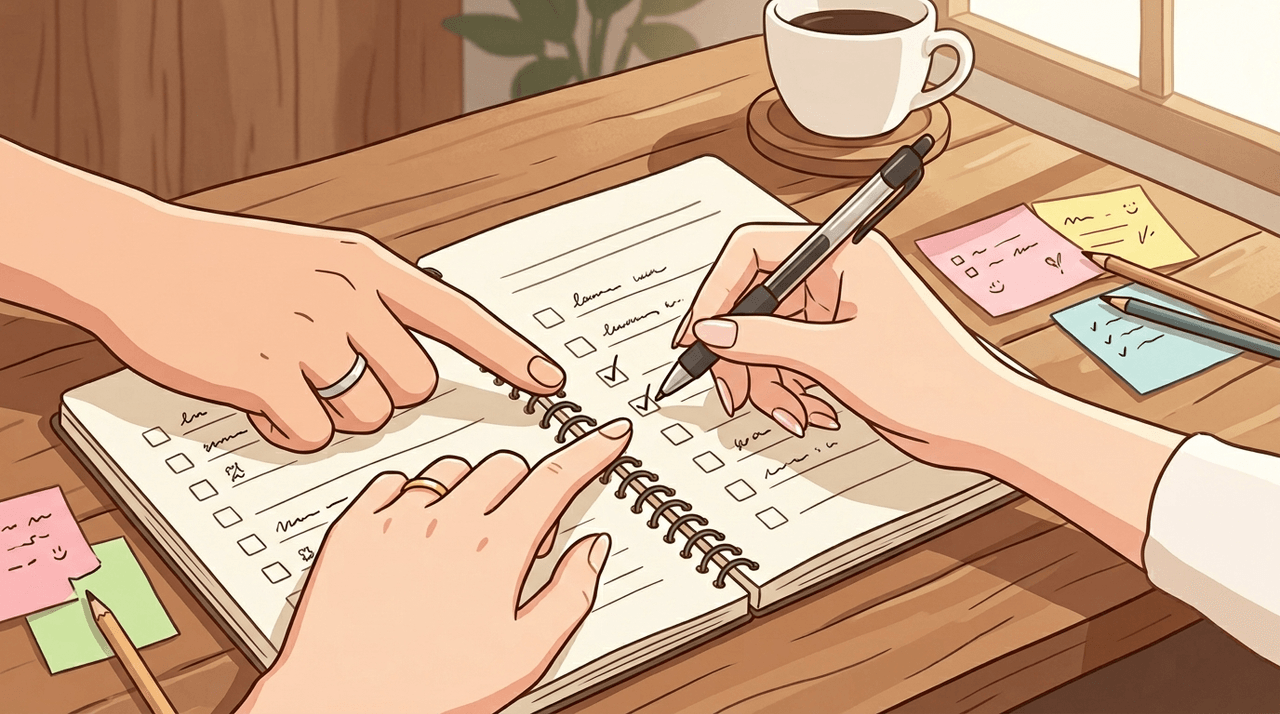
Studies show that over half of all couples end up spending more than they planned — knowing the full picture in advance makes it much easier to budget efficiently. The venue and catering stand out at first, but following this checklist lets you work through everything step by step without missing a thing. All the easy-to-overlook items are organized into 4 stages across a 12 to 18 month timeline. The ⭐ count indicates importance (⭐ reference / ⭐⭐ important / ⭐⭐⭐ essential). If you'd like to understand the overall flow, check the checklist guide first.
Stage 1: Budget · Venue · Date Confirmed
This is the starting point of wedding planning. Set your budget, pick a date, and lock down the venue so every other decision can fall into place.
Engagement Foundations
Before diving into vendor research, get aligned as a couple on the big-picture decisions. Budget, guest count, and overall vision should be settled early so every choice afterward has a clear framework.
Build your budget with a 10-15% contingency fund. Unexpected costs like dress alterations, extra decor, and vendor tips add up fast.
Venue
Popular time slots (Saturday evenings in peak season) can fill up 12 months or more in advance. Narrow down your candidates first, and check each item below during tours to make comparisons easier.
Venue rental $5,000-15,000, catering $75-150 per person (plan for 80-85% attendance), floral $1,500-4,000. Saturday evenings are the most expensive. Friday evenings and Sundays are 20-40% cheaper.
Saturday evening slots in spring (April-June) and fall (September-October) fill up 9-12 months in advance. Off-season (November-March) dates are easier to book and often discounted.
Stage 2: Vendors · Attire · Ceremony Details
Once the venue is confirmed, start booking your key vendors and nailing down ceremony details. Also refer to how to choose your studio/dress/makeup.
Wedding Attire and Beauty
Wedding dresses can take 6-9 months to order and deliver, plus another 2 months for alterations. Starting early gives you the widest selection and avoids rush fees.
Wedding dress $1,500-4,000, alterations $300-800, hair and makeup $200-600. Buying off-the-rack or sample sales can cut dress costs by 30-50%.
Photography and Videography
Your photos and video are what you'll revisit for decades. Book your photographer and videographer 8-10 months before the wedding, especially during peak season.
Photography $3,500-6,000, videography $2,000-5,000. Bundling both from the same company can save 10-20%.
Ceremony Preparation
Custom wedding bands take 4-8 weeks. Booking an officiant and writing your vows should happen at least 3 months ahead. Nail down the ceremony program first so you can see exactly which people and items you still need.
Book the officiant and musicians at least 3 months in advance. Custom wedding band orders take 4-8 weeks.
Stage 3: Invitations · Events · Admin
Starting 4-6 months before the wedding, work on invitations, pre-wedding events, and administrative paperwork in parallel.
Save-the-Dates and Invitations
Save-the-dates go out 6-8 months before the wedding (earlier for destination weddings). Formal invitations follow at 6-8 weeks out. Proofread everything carefully. Name misspellings and wrong dates are the most common errors.
Send save-the-dates 6-8 months out, formal invitations 6-8 weeks out. Double-check every name and address before printing.
Wedding Registry
Setting up your registry early gives guests time to shop for engagement parties and showers, not just the wedding itself. Aim to have it live 8-10 months before the wedding.
Register for 20-30% more items than your guest count. Some guests buy off-registry, so having extra options prevents duplicates.
Pre-Wedding Events
These celebrations are a beloved part of Western wedding culture. While the wedding party typically hosts, the couple should be involved in planning timelines and guest lists.
Rehearsal dinner costs typically run $30-75 per person depending on the venue. A casual restaurant or backyard BBQ keeps costs down while still feeling special.
Honeymoon
Many countries require your passport to have at least 6 months of validity remaining to enter. The best time to book flights is about 4 months before departure, so once you've chosen your destination, move fast.
Peak-season flights are cheapest when booked 4 months out. Make sure your passport has at least 6 months of validity remaining — renew it well in advance if needed.
New Home
If you're moving in together for the first time (or upgrading to a new place), start house hunting 3-4 months before the wedding. Visit your top picks both during the day and at night, as noise and lighting change dramatically.
Moving during summer months costs 20-40% more than off-peak. Consider a weekday move if possible.
Administrative Paperwork
Your marriage license is required before the ceremony. Filing deadlines and requirements vary by state, so check your local county clerk's office early.
Marriage license fees range from $30-100 depending on the state. Some states offer a discount if you complete a premarital counseling course.
Stage 4: Wedding Day
Day-of Setup
Plan to arrive 2 hours before the ceremony. Working through vendor check-ins, decor inspection, and the rehearsal walkthrough in order will help reduce chaos on the day.
Emergency Kit (Pack into a bag by D-3)
The most-used items on the day are double-sided tape, pain relievers, and a portable charger. Pre-sorting tip envelopes by vendor means you won't be scrambling at the last minute.
Pre-sort tip envelopes and label each one clearly. Typical tip amounts: officiant $50-100, DJ/band $50-150, photographer $50-200, hair/makeup artist $50-100 each, caterer/venue staff 15-20% of total bill.
Wedding Favors
Guest preferences for favors vary by age group and wedding style. Custom items take 2-3 weeks to produce, so finalizing the quantity early gives you breathing room.
$3-15 per guest is typical for wedding favors. Custom items take 2-3 weeks, so complete your order by D-30.
Related Posts
View List
Stage 1. Set the Vision and Budget (D-360 to D-270)
Wedding Planning: Where Do You Even Start?
The ring is on, the photos are posted, and then reality sets in. "So... what do we do first?" Venue, photographer, guest list, registry, honeymoon.

The Right Order Saves You Money and Stress
18 Months to D-Day: Your Complete Wedding Planning Timeline
The most common thing couples share after the wedding? "I wish we had known sooner — we would have had so much more breathing room." Popular Saturday evening venues in major US cities book up 12 to…
Create Your Checklist
Checklist Guide: Enter Wedding Date, 73 Items Auto-Organized
The proposal excitement fades fast, and reality sets in. When should we meet each other's parents? How far in advance should we book the venue? What about the dress? The honeymoon?
 Grand Bracelet
 Spirited Morning
Stage 1: Budget · Venue · Date Confirmed
Wedding Planning Checklist: Every Detail You Might Miss
Studies show that over half of all couples end up spending more than they planned — knowing the full picture in advance makes it much easier to budget efficiently. The venue and catering stand out at first, but following this checklist lets you work through everything step by step without missing a thing. All the easy-to-overlook items are organized into 4 stages across a 12 to 18 month timeline. The ⭐ count indicates importance (⭐ reference / ⭐⭐ important / ⭐⭐⭐ essential). If you'd like to understand the overall flow, check the checklist guide first.
Stage 1: Budget · Venue · Date Confirmed
This is the starting point of wedding planning. Set your budget, pick a date, and lock down the venue so every other decision can fall into place.
Engagement Foundations
Before diving into vendor research, get aligned as a couple on the big-picture decisions. Budget, guest count, and overall vision should be settled early so every choice afterward has a clear framework.
Build your budget with a 10-15% contingency fund. Unexpected costs like dress alterations, extra decor, and vendor tips add up fast.
Venue
Popular time slots (Saturday evenings in peak season) can fill up 12 months or more in advance. Narrow down your candidates first, and check each item below during tours to make comparisons easier.
Venue rental $5,000-15,000, catering $75-150 per person (plan for 80-85% attendance), floral $1,500-4,000. Saturday evenings are the most expensive. Friday evenings and Sundays are 20-40% cheaper.
Saturday evening slots in spring (April-June) and fall (September-October) fill up 9-12 months in advance. Off-season (November-March) dates are easier to book and often discounted.
Stage 2: Vendors · Attire · Ceremony Details
Once the venue is confirmed, start booking your key vendors and nailing down ceremony details. Also refer to how to choose your studio/dress/makeup.
Wedding Attire and Beauty
Wedding dresses can take 6-9 months to order and deliver, plus another 2 months for alterations. Starting early gives you the widest selection and avoids rush fees.
Wedding dress $1,500-4,000, alterations $300-800, hair and makeup $200-600. Buying off-the-rack or sample sales can cut dress costs by 30-50%.
Photography and Videography
Your photos and video are what you'll revisit for decades. Book your photographer and videographer 8-10 months before the wedding, especially during peak season.
Photography $3,500-6,000, videography $2,000-5,000. Bundling both from the same company can save 10-20%.
Ceremony Preparation
Custom wedding bands take 4-8 weeks. Booking an officiant and writing your vows should happen at least 3 months ahead. Nail down the ceremony program first so you can see exactly which people and items you still need.
Book the officiant and musicians at least 3 months in advance. Custom wedding band orders take 4-8 weeks.
Stage 3: Invitations · Events · Admin
Starting 4-6 months before the wedding, work on invitations, pre-wedding events, and administrative paperwork in parallel.
Save-the-Dates and Invitations
Save-the-dates go out 6-8 months before the wedding (earlier for destination weddings). Formal invitations follow at 6-8 weeks out. Proofread everything carefully. Name misspellings and wrong dates are the most common errors.
Send save-the-dates 6-8 months out, formal invitations 6-8 weeks out. Double-check every name and address before printing.
Wedding Registry
Setting up your registry early gives guests time to shop for engagement parties and showers, not just the wedding itself. Aim to have it live 8-10 months before the wedding.
Register for 20-30% more items than your guest count. Some guests buy off-registry, so having extra options prevents duplicates.
Pre-Wedding Events
These celebrations are a beloved part of Western wedding culture. While the wedding party typically hosts, the couple should be involved in planning timelines and guest lists.
Rehearsal dinner costs typically run $30-75 per person depending on the venue. A casual restaurant or backyard BBQ keeps costs down while still feeling special.
Honeymoon
Many countries require your passport to have at least 6 months of validity remaining to enter. The best time to book flights is about 4 months before departure, so once you've chosen your destination, move fast.
Peak-season flights are cheapest when booked 4 months out. Make sure your passport has at least 6 months of validity remaining — renew it well in advance if needed.
New Home
If you're moving in together for the first time (or upgrading to a new place), start house hunting 3-4 months before the wedding. Visit your top picks both during the day and at night, as noise and lighting change dramatically.
Moving during summer months costs 20-40% more than off-peak. Consider a weekday move if possible.
Administrative Paperwork
Your marriage license is required before the ceremony. Filing deadlines and requirements vary by state, so check your local county clerk's office early.
Marriage license fees range from $30-100 depending on the state. Some states offer a discount if you complete a premarital counseling course.
Stage 4: Wedding Day
Day-of Setup
Plan to arrive 2 hours before the ceremony. Working through vendor check-ins, decor inspection, and the rehearsal walkthrough in order will help reduce chaos on the day.
Emergency Kit (Pack into a bag by D-3)
The most-used items on the day are double-sided tape, pain relievers, and a portable charger. Pre-sorting tip envelopes by vendor means you won't be scrambling at the last minute.
Pre-sort tip envelopes and label each one clearly. Typical tip amounts: officiant $50-100, DJ/band $50-150, photographer $50-200, hair/makeup artist $50-100 each, caterer/venue staff 15-20% of total bill.
Wedding Favors
Guest preferences for favors vary by age group and wedding style. Custom items take 2-3 weeks to produce, so finalizing the quantity early gives you breathing room.
$3-15 per guest is typical for wedding favors. Custom items take 2-3 weeks, so complete your order by D-30.
Related Posts
View ListStage 1. Set the Vision and Budget (D-360 to D-270)
Wedding Planning: Where Do You Even Start?
The ring is on, the photos are posted, and then reality sets in. "So... what do we do first?" Venue, photographer, guest list, registry, honeymoon.
The Right Order Saves You Money and Stress
18 Months to D-Day: Your Complete Wedding Planning Timeline
The most common thing couples share after the wedding? "I wish we had known sooner — we would have had so much more breathing room." Popular Saturday evening venues in major US cities book up 12 to…
Create Your Checklist
Checklist Guide: Enter Wedding Date, 73 Items Auto-Organized
The proposal excitement fades fast, and reality sets in. When should we meet each other's parents? How far in advance should we book the venue? What about the dress? The honeymoon?
Grand BraceletSpirited Morning