

Secular (Non-Religious) Ceremony Script
Wedding Officiant Guide: Types, Costs, and Full Ceremony Scripts

Over 51% of couples now choose a friend or family member to officiate their wedding, up from 29% just a decade ago. At the same time, nearly half of all ceremonies in the U.S. are fully secular. Whether you want a pastor, a professional celebrant, or your best friend at the altar, the officiant you pick sets the entire tone of your ceremony.
This guide covers officiant types with real cost ranges, full ceremony scripts for secular and religious weddings, a standard ceremony structure you can customize, and tips to make sure the big moment goes smoothly.
If you love the idea of a personal touch but worry about experience, have your friend deliver the opening words and a personal story, then let a professional MC or coordinator handle logistics and cues behind the scenes.
Secular (Non-Religious) Ceremony Script
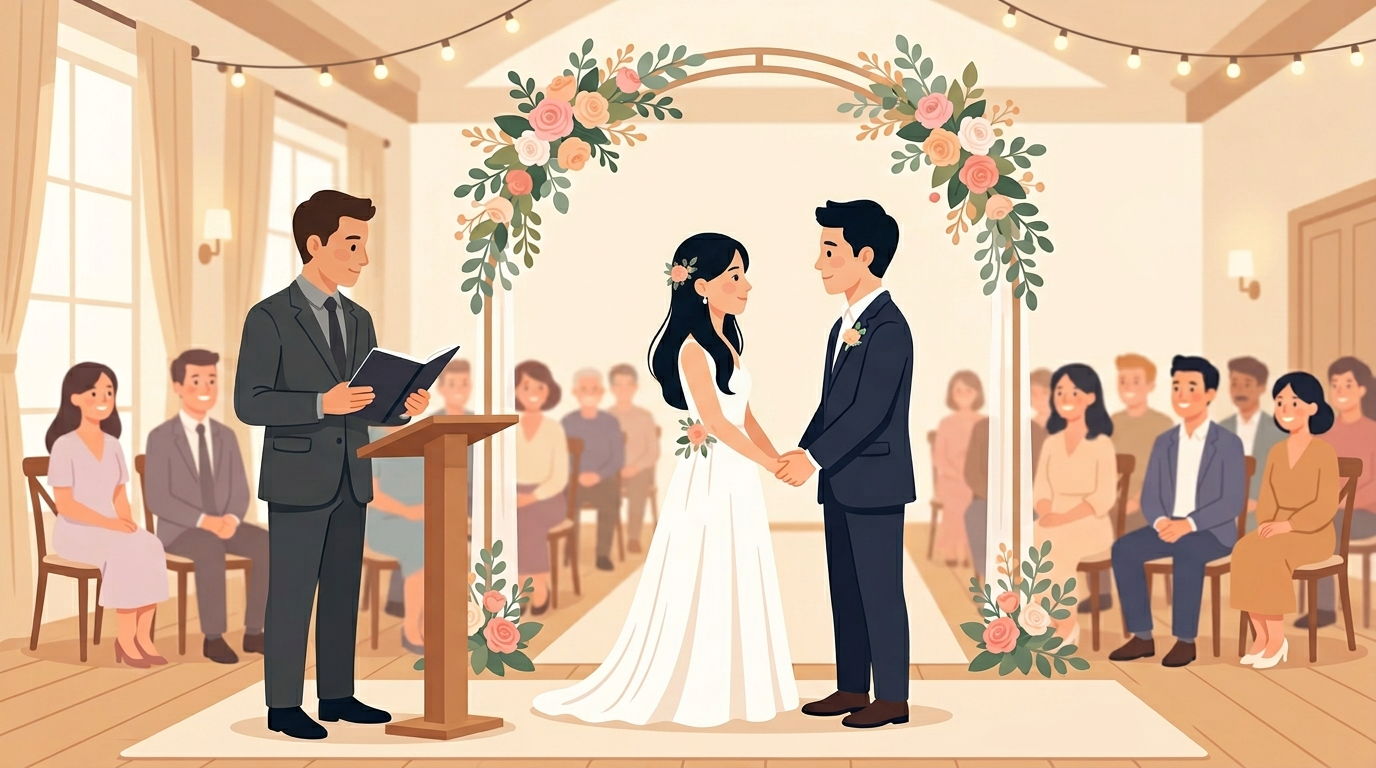
This is the most popular format in the U.S. today, and it works for any couple regardless of background. The sweet spot is 15 to 20 minutes total. Keep the officiant's spoken portions to about 5 to 7 minutes so the ceremony never drags.
A secular script does not mean cold or impersonal. It simply replaces prayers and scripture with personal stories, poetry, or meaningful quotes. The focus stays on the couple's journey and their promises to each other.
Christian Ceremony Script
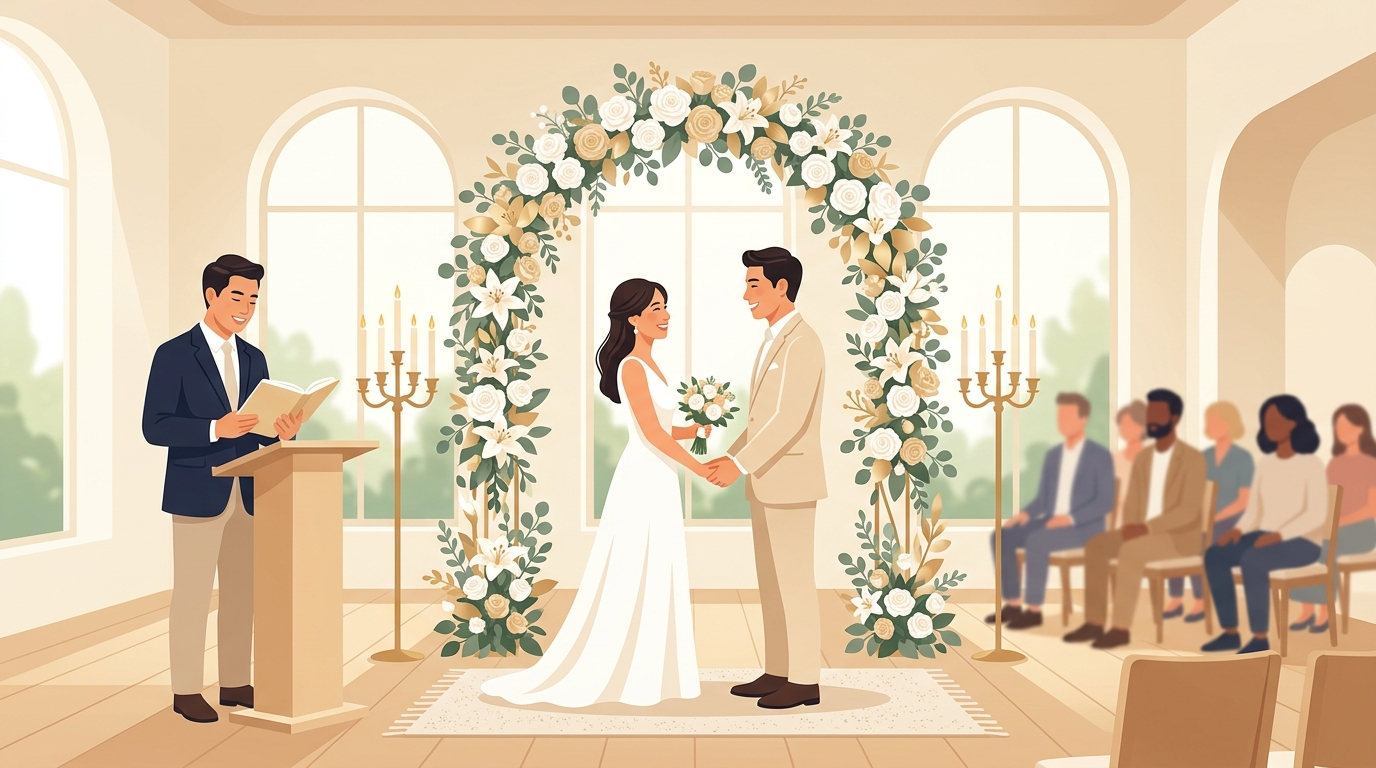
For couples who want their faith woven into the ceremony, two Bible passages appear more than any others at weddings. 1 Corinthians 13:4, "Love is patient, love is kind..." and Genesis 2:24, "The two shall become one flesh." This script places scripture, a short homily, and a prayer at natural points in the flow so the ceremony feels reverent without running long.
Buddhist Ceremony Script
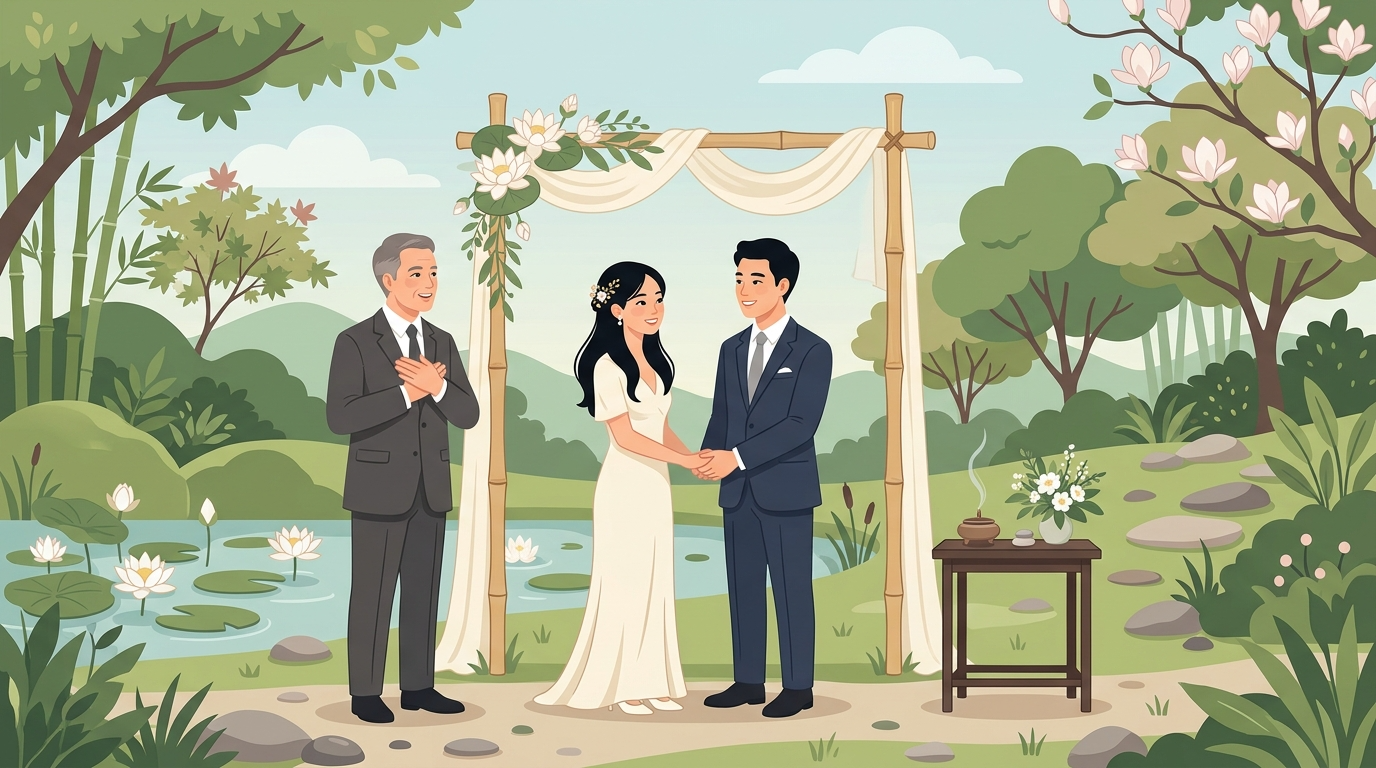
A Buddhist ceremony centers on the concept of karma and compassion. The core idea is that countless lifetimes of connection have brought this couple together at this exact moment. The script closes with words of loving-kindness, a tone that resonates with guests of any background.
Standard Western Ceremony Structure
Planning your ceremony from scratch can feel overwhelming, but nearly every wedding follows the same basic skeleton. Here is the standard flow, which you can expand or simplify to fit your style.
Ceremony Order: Two Popular Layouts
The biggest question couples ask is "how do we fill the time if we skip a long sermon?" The answer: combine 2 to 3 personal elements and keep total ceremony time between 20 and 30 minutes. Guest satisfaction peaks during personal vows and the pronouncement, so build around those moments.
Heartfelt Style (25~30 min)
Casual Style (15~20 min)
The heartfelt style is perfect when you have guests of all ages who appreciate a sense of ceremony. The casual style works best for smaller, relaxed celebrations with a younger crowd or an outdoor setting.
Whether your officiant is a friend or a pro, read the full script out loud with a timer at least twice before the wedding day. Also do a sound check at the venue and confirm the mic handoff cue with your DJ or coordinator.
Winging It vs. Planning Together
Related Posts
View List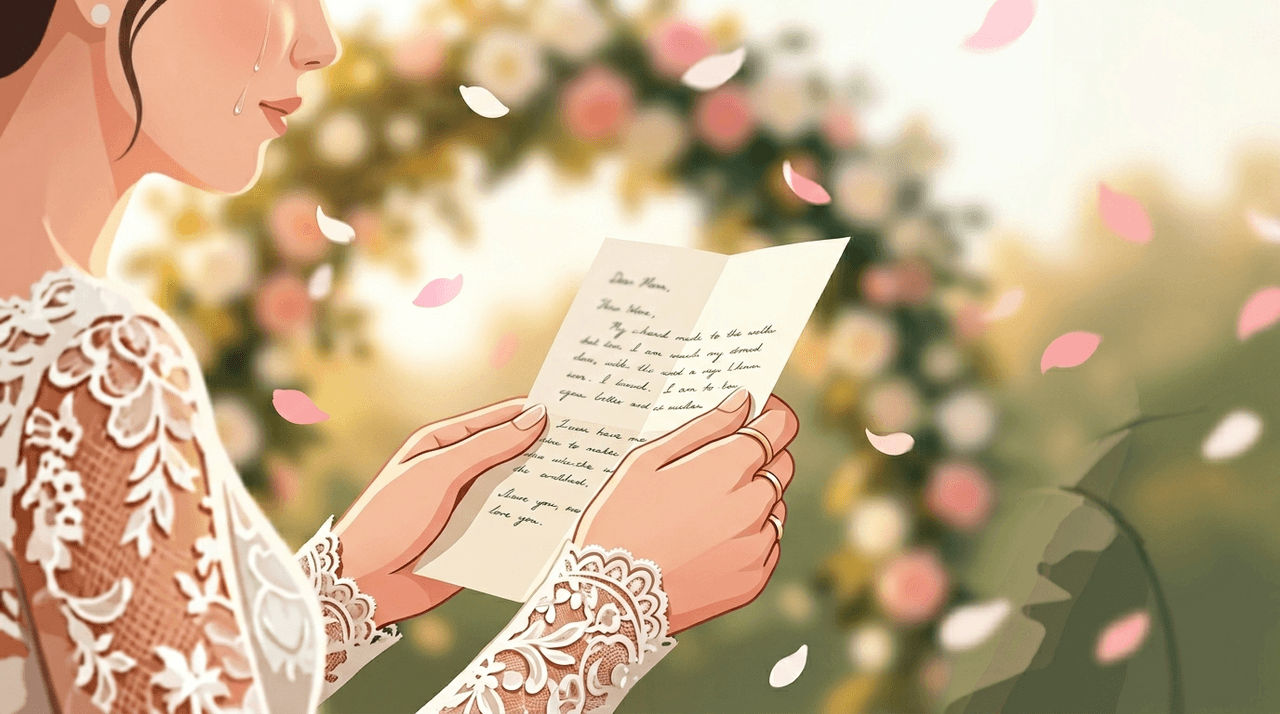
Choose Your Format
How to Write Your Wedding Vows
Deciding how you'll read your vows makes writing them much easier. Your vows only need three things. Follow this order and it flows naturally. One memory that only the two of you share.

Decide Whether to Have an Officiant
Officiant Speech: How to Prepare It Right
If you're torn between a friend and a professional, have the friend give a toast or blessing while a professional MC handles the overall flow. Best of both worlds.
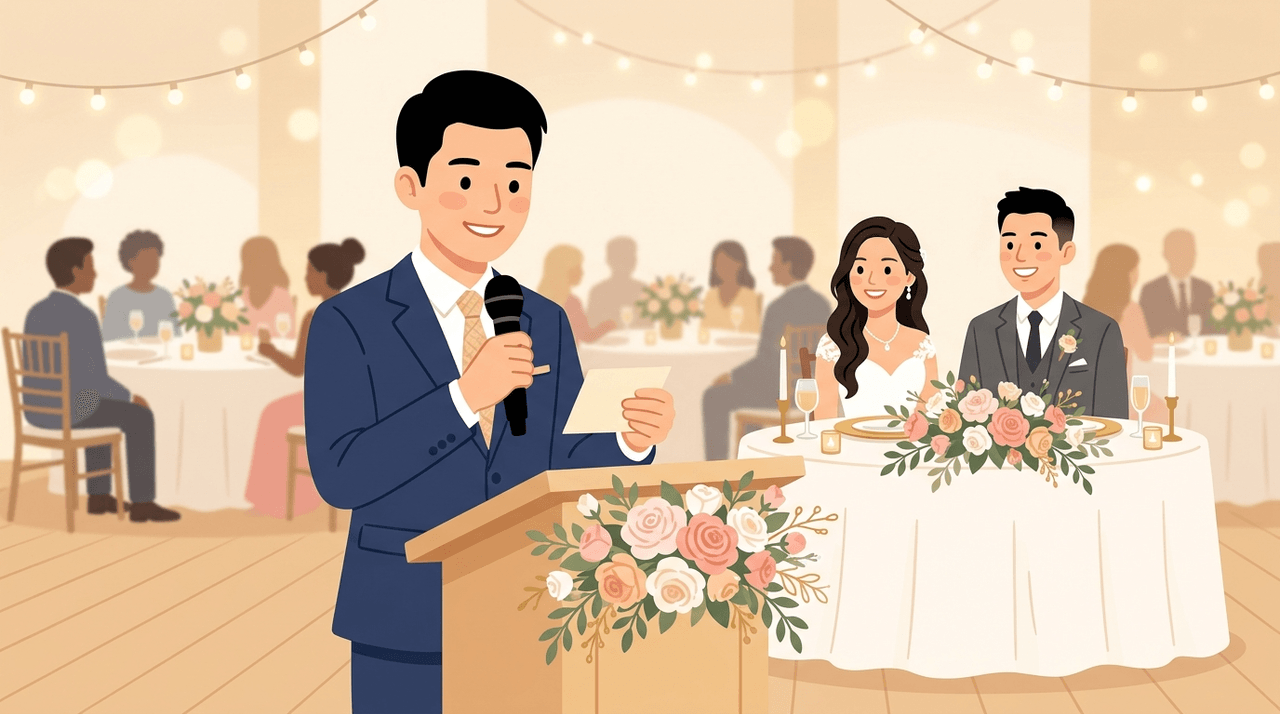
Friend Toast: Full Script
Wedding Toast Examples: Ready-to-Use Scripts by Relationship
Being asked to give a toast is an honor, but the pressure is real. 68% of guests say an overly long toast is the most awkward moment at a wedding, and 73% of couples wish they had given time…
 Eternal Sky
 Radiant Fan
Secular (Non-Religious) Ceremony Script
Wedding Officiant Guide: Types, Costs, and Full Ceremony Scripts
Over 51% of couples now choose a friend or family member to officiate their wedding, up from 29% just a decade ago. At the same time, nearly half of all ceremonies in the U.S. are fully secular. Whether you want a pastor, a professional celebrant, or your best friend at the altar, the officiant you pick sets the entire tone of your ceremony.
This guide covers officiant types with real cost ranges, full ceremony scripts for secular and religious weddings, a standard ceremony structure you can customize, and tips to make sure the big moment goes smoothly.
If you love the idea of a personal touch but worry about experience, have your friend deliver the opening words and a personal story, then let a professional MC or coordinator handle logistics and cues behind the scenes.
Secular (Non-Religious) Ceremony Script
This is the most popular format in the U.S. today, and it works for any couple regardless of background. The sweet spot is 15 to 20 minutes total. Keep the officiant's spoken portions to about 5 to 7 minutes so the ceremony never drags.
A secular script does not mean cold or impersonal. It simply replaces prayers and scripture with personal stories, poetry, or meaningful quotes. The focus stays on the couple's journey and their promises to each other.
Christian Ceremony Script
For couples who want their faith woven into the ceremony, two Bible passages appear more than any others at weddings. 1 Corinthians 13:4, "Love is patient, love is kind..." and Genesis 2:24, "The two shall become one flesh." This script places scripture, a short homily, and a prayer at natural points in the flow so the ceremony feels reverent without running long.
Buddhist Ceremony Script
A Buddhist ceremony centers on the concept of karma and compassion. The core idea is that countless lifetimes of connection have brought this couple together at this exact moment. The script closes with words of loving-kindness, a tone that resonates with guests of any background.
Standard Western Ceremony Structure
Planning your ceremony from scratch can feel overwhelming, but nearly every wedding follows the same basic skeleton. Here is the standard flow, which you can expand or simplify to fit your style.
Ceremony Order: Two Popular Layouts
The biggest question couples ask is "how do we fill the time if we skip a long sermon?" The answer: combine 2 to 3 personal elements and keep total ceremony time between 20 and 30 minutes. Guest satisfaction peaks during personal vows and the pronouncement, so build around those moments.
Heartfelt Style (25~30 min)
Casual Style (15~20 min)
The heartfelt style is perfect when you have guests of all ages who appreciate a sense of ceremony. The casual style works best for smaller, relaxed celebrations with a younger crowd or an outdoor setting.
Whether your officiant is a friend or a pro, read the full script out loud with a timer at least twice before the wedding day. Also do a sound check at the venue and confirm the mic handoff cue with your DJ or coordinator.
Winging It vs. Planning Together
Related Posts
View ListChoose Your Format
How to Write Your Wedding Vows
Deciding how you'll read your vows makes writing them much easier. Your vows only need three things. Follow this order and it flows naturally. One memory that only the two of you share.
Decide Whether to Have an Officiant
Officiant Speech: How to Prepare It Right
If you're torn between a friend and a professional, have the friend give a toast or blessing while a professional MC handles the overall flow. Best of both worlds.
Friend Toast: Full Script
Wedding Toast Examples: Ready-to-Use Scripts by Relationship
Being asked to give a toast is an honor, but the pressure is real. 68% of guests say an overly long toast is the most awkward moment at a wedding, and 73% of couples wish they had given time…
Eternal SkyRadiant Fan