

The #1 most touching moment guests remember is heartfelt vows and letter readings (40%, wedding survey). With over 80% of modern weddings going officiant-free, self-written vows have become the highlight of the ceremony. Choose from alternating, together, or individual formats and use it right away.
Alternating Vows
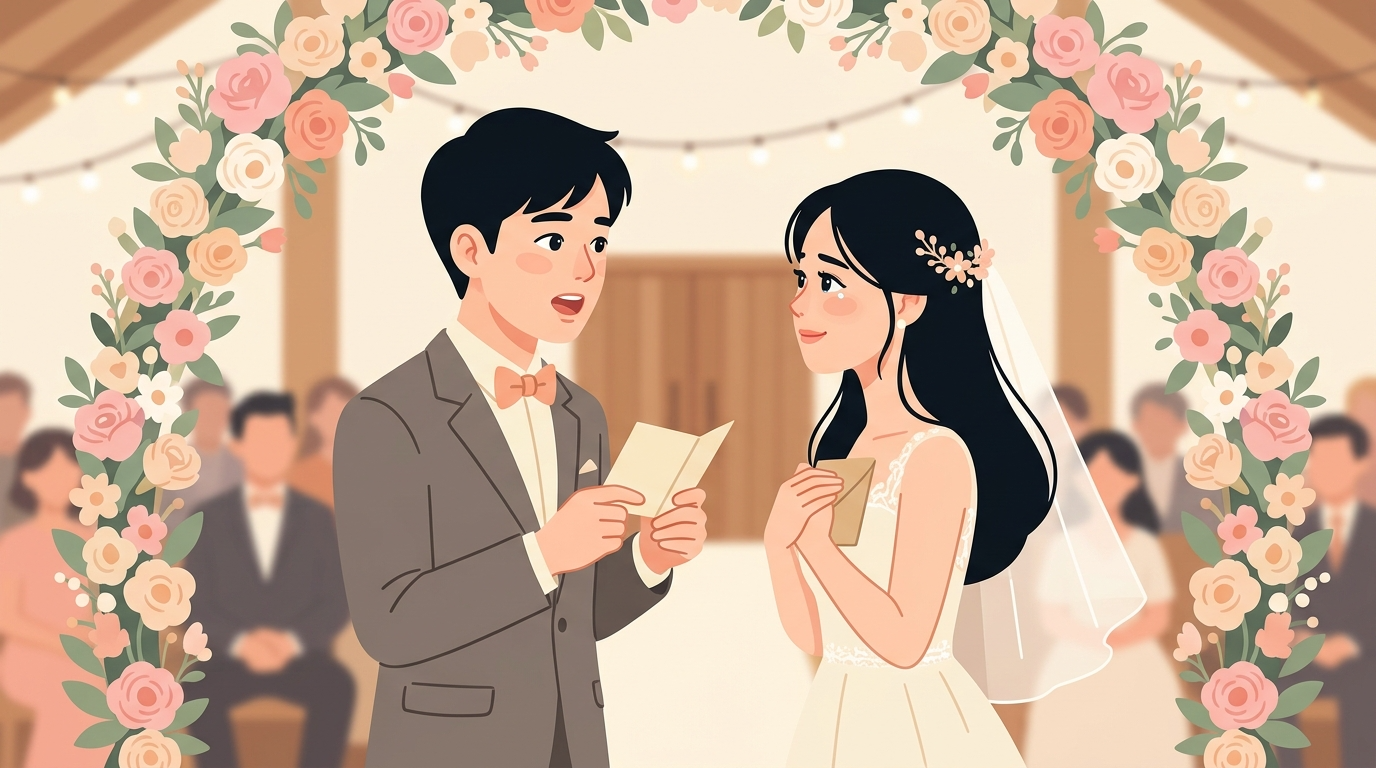
The most popular format. The groom and bride read one line at a time, taking turns, and finish the last lines together. It's ideal for couples who want a unified feel.
Reading Together Vows

Start and end together, individual parts in the middle. It works well when you want to blend the "we" and "I" voices together.
Groom's Individual Vows
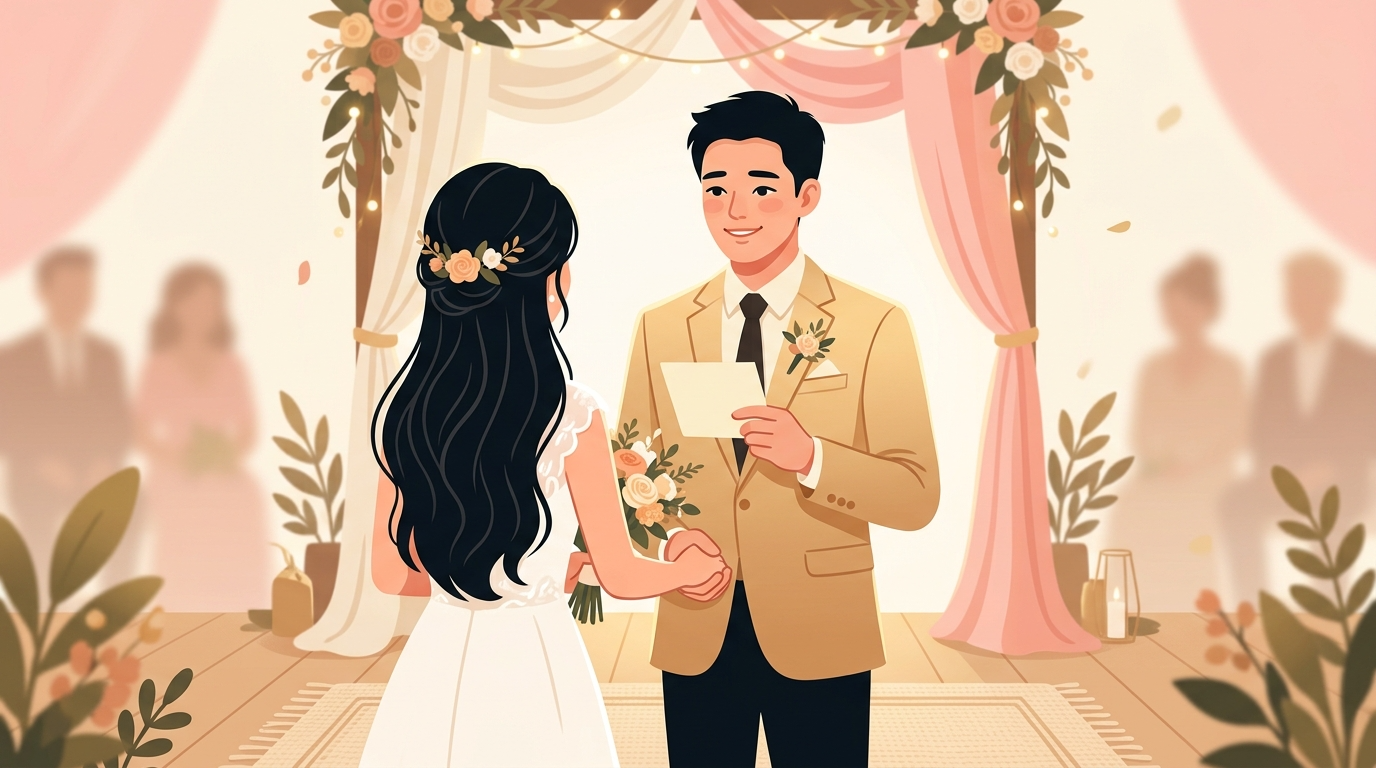
The groom reads his vow to the bride alone. It suits couples who have a lot to say, and it's especially moving at intimate ceremonies.
Bride's Individual Vows
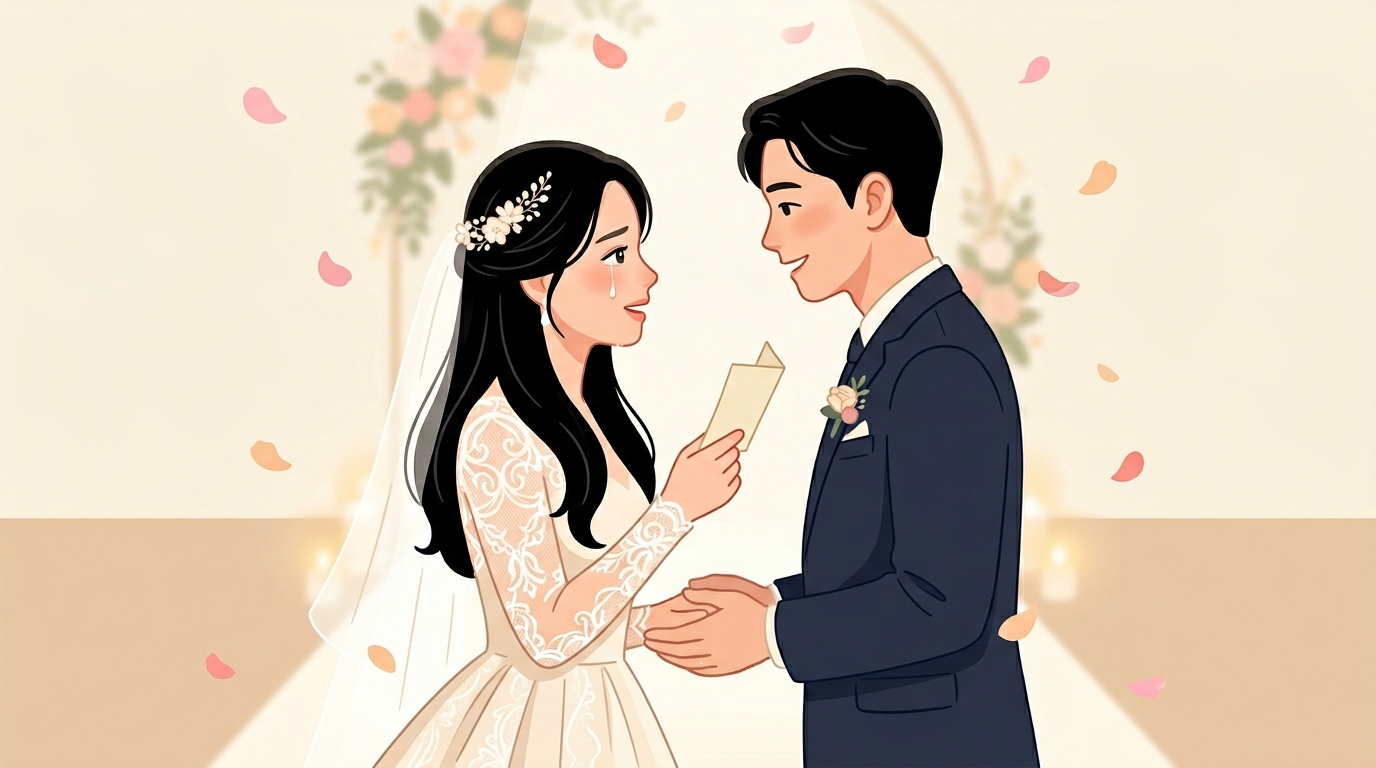
The bride reads her vow to the groom alone. It suits couples who have a lot to say, and it's especially moving at intimate ceremonies.
Vow Length Guide
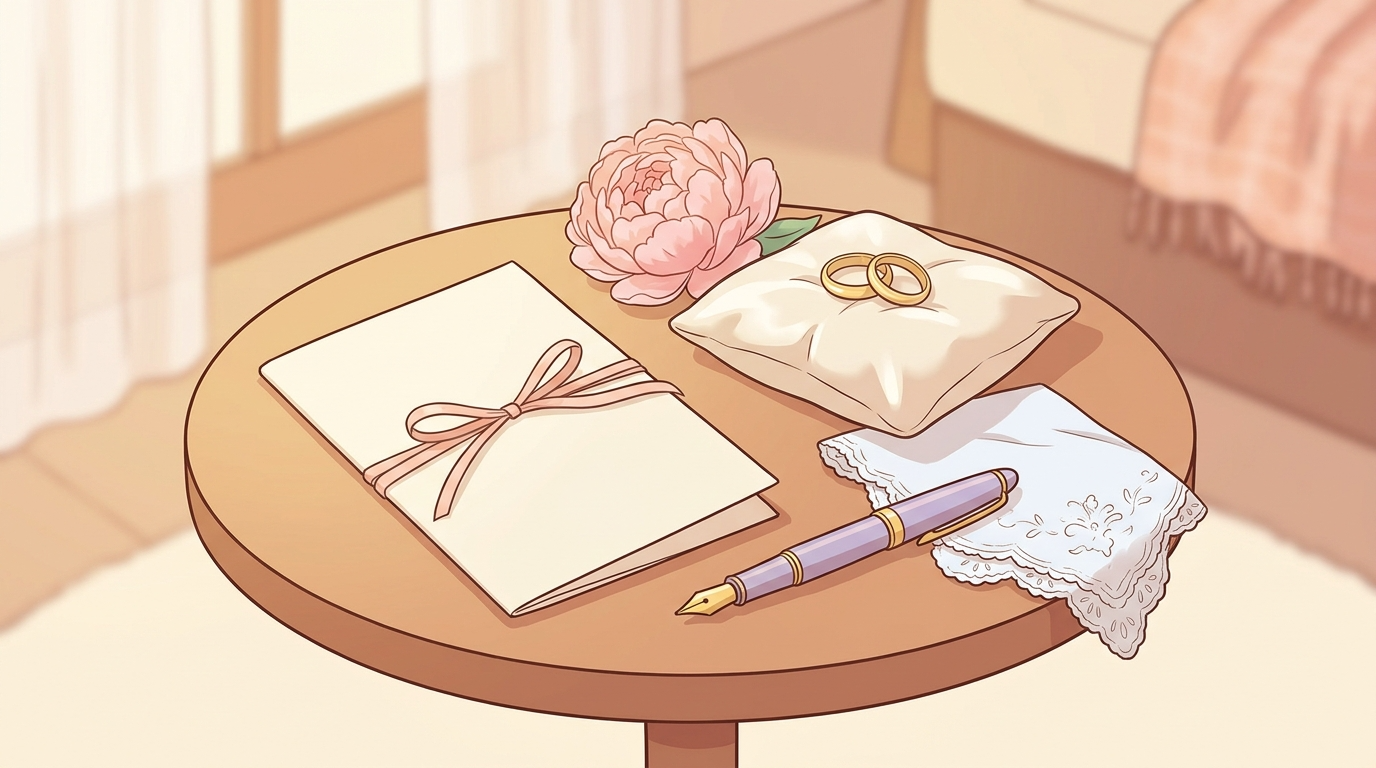
Around 1 minute (150-250 words) is ideal. Too long and you risk crying or your voice shaking so much you can't finish.
Just coordinate length with your partner. You can keep the content secret, but agree on "both about 1 minute."
What to Include vs. Leave Out
Include one shared episode only you two know, one specific promise, and a short line of gratitude. Humor is welcome in the promise section, but keep it to 1-2 jokes. Leave out past relationships, stories about nearly breaking up, inside jokes guests won't get, and overly long tangents.
What to Do If You Cry
Have a handkerchief ready and tell the MC in advance: "If I start crying during the vows, please give me about 10 seconds."
It's okay to cry. Guests are actually more moved when it happens. Sincerity matters more than a flawless reading.
Checklist
Final check before your vows are complete. Format, length, and day-of supplies, all in one place.
Frequently Asked Questions
Related scripts you might need:
- MC script: Wedding MC Cue Guide
- Officiant speech: Officiant-Free Wedding Script
- Toasts: Full Toast Scripts by Relationship
Related Posts
View List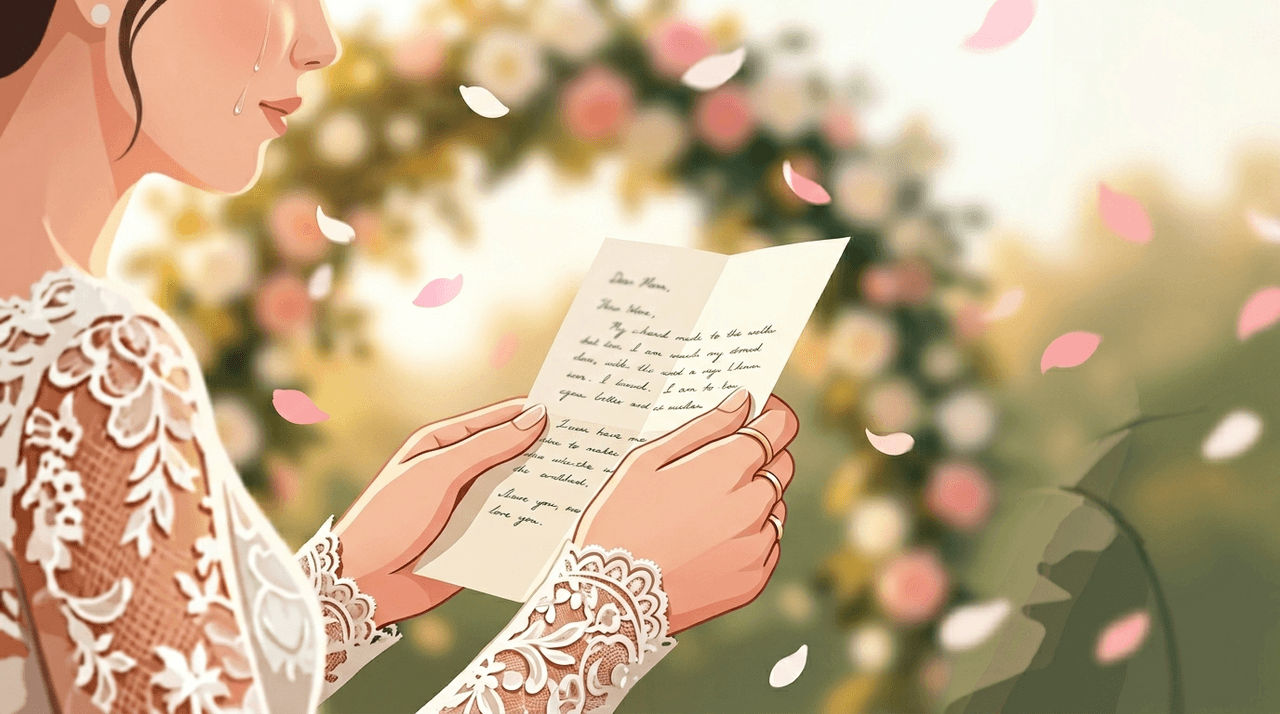
Choose Your Format
How to Write Your Wedding Vows
Deciding how you'll read your vows makes writing them much easier. Your vows only need three things. Follow this order and it flows naturally. One memory that only the two of you share.

Decide Whether to Have an Officiant
Officiant Speech: How to Prepare It Right
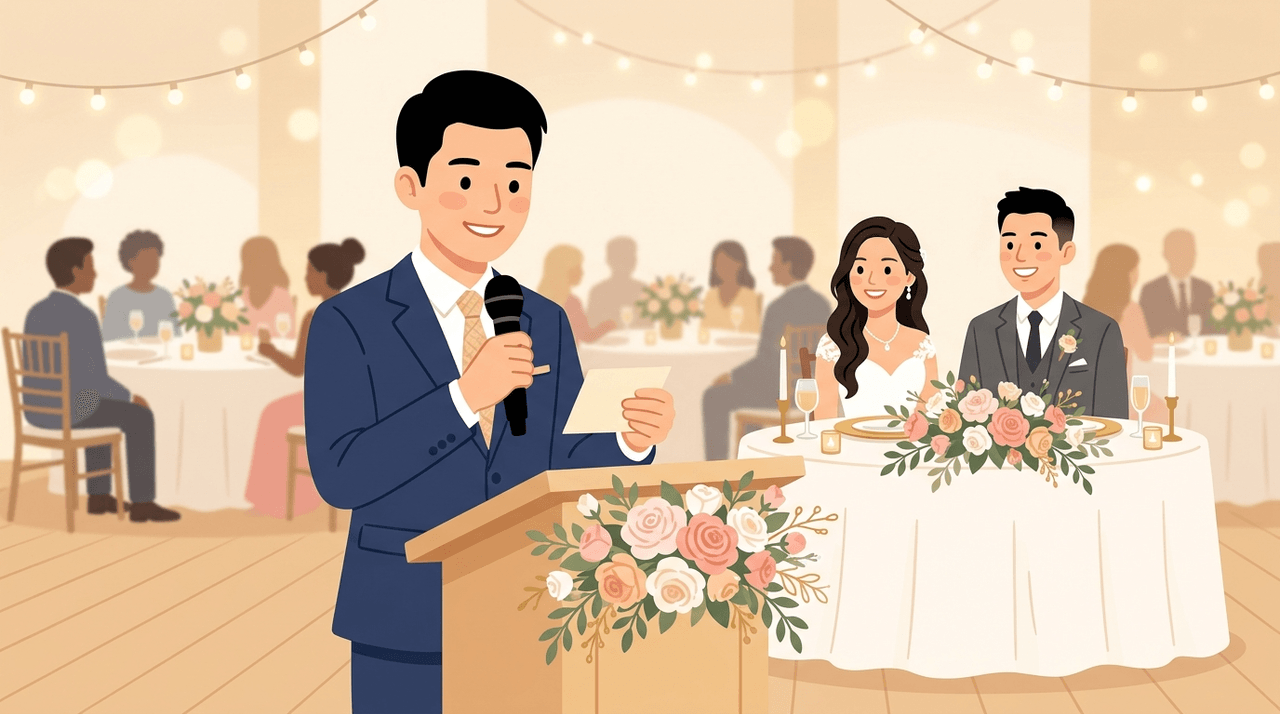
If you're torn between a friend and a professional, have the friend give a toast or blessing while a professional MC handles the overall flow. Best of both worlds.
Friend Toast: Full Script
Wedding Toast Examples: Ready-to-Use Scripts by Relationship
Being asked to give a toast is an honor, but the pressure is real. 68% of guests say an overly long toast is the most awkward moment at a wedding, and 73% of couples wish they had given time…
 Magical Squirrel
 Eternal Sky
 Tremendous Melon
The #1 most touching moment guests remember is heartfelt vows and letter readings (40%, wedding survey). With over 80% of modern weddings going officiant-free, self-written vows have become the highlight of the ceremony. Choose from alternating, together, or individual formats and use it right away.
Alternating Vows
The most popular format. The groom and bride read one line at a time, taking turns, and finish the last lines together. It's ideal for couples who want a unified feel.
Reading Together Vows
Start and end together, individual parts in the middle. It works well when you want to blend the "we" and "I" voices together.
Groom's Individual Vows
The groom reads his vow to the bride alone. It suits couples who have a lot to say, and it's especially moving at intimate ceremonies.
Bride's Individual Vows
The bride reads her vow to the groom alone. It suits couples who have a lot to say, and it's especially moving at intimate ceremonies.
Vow Length Guide
Around 1 minute (150-250 words) is ideal. Too long and you risk crying or your voice shaking so much you can't finish.
Just coordinate length with your partner. You can keep the content secret, but agree on "both about 1 minute."
What to Include vs. Leave Out
Include one shared episode only you two know, one specific promise, and a short line of gratitude. Humor is welcome in the promise section, but keep it to 1-2 jokes. Leave out past relationships, stories about nearly breaking up, inside jokes guests won't get, and overly long tangents.
What to Do If You Cry
Have a handkerchief ready and tell the MC in advance: "If I start crying during the vows, please give me about 10 seconds."
It's okay to cry. Guests are actually more moved when it happens. Sincerity matters more than a flawless reading.
Checklist
Final check before your vows are complete. Format, length, and day-of supplies, all in one place.
Frequently Asked Questions
Related scripts you might need:
- MC script: Wedding MC Cue Guide
- Officiant speech: Officiant-Free Wedding Script
- Toasts: Full Toast Scripts by Relationship
Related Posts
View ListChoose Your Format
How to Write Your Wedding Vows
Deciding how you'll read your vows makes writing them much easier. Your vows only need three things. Follow this order and it flows naturally. One memory that only the two of you share.
Decide Whether to Have an Officiant
Officiant Speech: How to Prepare It Right
If you're torn between a friend and a professional, have the friend give a toast or blessing while a professional MC handles the overall flow. Best of both worlds.
Friend Toast: Full Script
Wedding Toast Examples: Ready-to-Use Scripts by Relationship
Being asked to give a toast is an honor, but the pressure is real. 68% of guests say an overly long toast is the most awkward moment at a wedding, and 73% of couples wish they had given time…
Magical SquirrelEternal SkyTremendous Melon