

The Gift-Giving Landscape Is Changing Fast
Wedding Registry, Rings & Home Setup: The Complete Guide

Attitudes toward wedding gifts and registries are shifting rapidly. Understanding current trends can save you real money, and stress. Checking for hidden costs ahead of time can also help prevent budget overruns.
The average wedding gift has climbed to $100–$150, up from $50–$75 just five years ago. With the average US wedding costing $33,000–$35,000, expectations have risen across the board.
In the past, couples registered for a complete household in one shot, every pot, pan, and towel. Today, couples are building gradually: buy essentials first, then add items over time. Cash funds, experiential registries, and "only what we truly need" minimalism are all growing fast. The "buy everything at once" era is over.
Wedding Rings & Jewelry
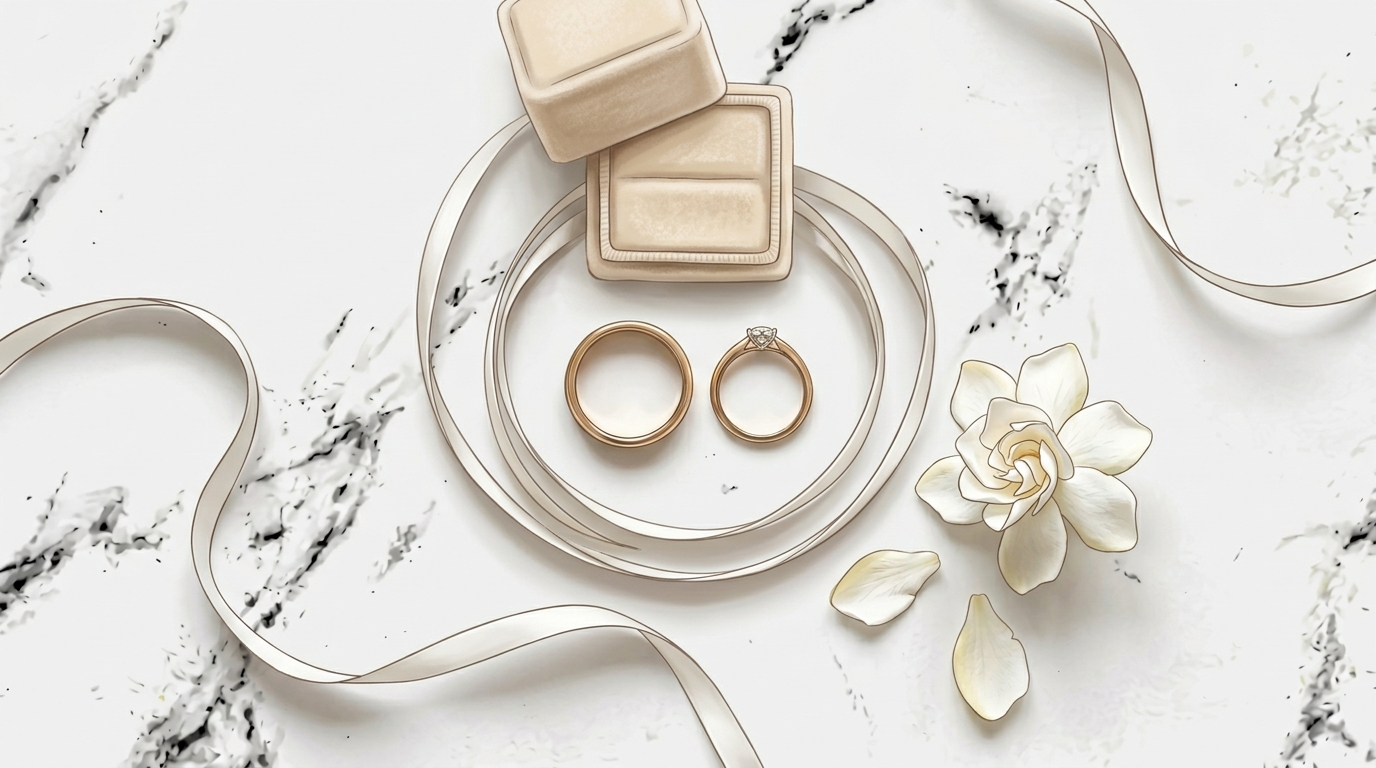
Wedding bands are the most fundamental exchange. Prices vary widely depending on brand and material, so set your budget before visiting stores. A simple gold band runs $500–$3,000 for a pair, while platinum costs $800–$2,500 and offers a premium no-tarnish look. Diamond engagement rings for the bride typically range $2,000–$10,000+, and lab-grown diamonds save 30–50%.
A watch ($500–$2,000) or necklace ($300–$1,500) can round out the exchange, but today most couples exchange rings only.
The scope of jewelry gifts is decided by mutual agreement between both families. Stay within a comfortable range, not pressure. The "three months' salary" rule is marketing, not tradition.
Registry & Traditional Gifts
The registry is the backbone of US wedding gift culture. Popular platforms include The Knot, Zola (universal registry, any store + cash funds), Amazon, Crate & Barrel, and Target. Register for a wide range of price points ($25–$500+) so every guest can find something comfortable.
Cash gifts are no longer taboo in the US. Platforms like Zola, HoneyFund, and Hitchd let you set up honeymoon funds or house down payment funds. The answer to "do we need a traditional registry?" is: if both sides agree, absolutely not required. A bridal shower (hosted by maid of honor 2–4 months before the wedding) is a lovely tradition, but keep in mind that shower gifts are in addition to the wedding gift.
Etiquette note: It's still considered slightly forward to ask for cash directly on the invitation. Put the registry or fund info on your wedding website instead.
Setting Up Your First Home
Many newlyweds are shifting from "buy everything upfront" to "build gradually."
Appliances
| Item | Purchase | Rent/Subscribe | Register For? |
|---|---|---|---|
| Refrigerator | $800–$2,500 | - | Usually not (too big for registry) |
| Washer + Dryer | $1,200–$2,500 | $40–$60/mo | Rarely |
| Mattress | $500–$2,500 | - | Yes (popular registry item) |
| Vacuum / Robot vacuum | $200–$800 | - | Yes |
| Coffee maker | $50–$300 | - | Yes (registry favorite) |
| Stand mixer | $250–$500 | - | Yes (classic registry pick) |
| Cookware set | $150–$600 | - | Yes |
Must-have before move-in: bed/mattress, basic cookware, towels, sheets, cleaning supplies. Add in the first few months: couch, dining table, coffee maker. Buy over time: stand mixer, robot vacuum, wine fridge, outdoor furniture.
"Buy everything now" vs. "add one thing at a time": the gradual approach is today's trend. You'll be surprised how many things you can live without for the first six months.
Furniture
Mattress (queen): $500–$2,500 | Sofa: $400–$2,500 | Dining table set: $300–$1,500 | Dresser/storage: $200–$1,200
Preparation Guide
Who Pays for What? Family Contributions
Traditionally, costs were divided along specific lines, but today most families negotiate openly. The wedding venue and reception were historically the bride's family's responsibility; rehearsal dinner the groom's family; rings each partner buys the other's. Today, split or negotiated is the most common approach for everything.
There's no single right answer. The most important thing is having an honest conversation based on each family's situation. "Each side contributes what they can" is the most common modern approach. What matters most is mutual respect throughout the process. For overall cost planning, see the complete wedding cost guide; for favors, check return gift ideas.
Modern Alternatives
Traditional approaches don't work for every couple. Instead of a full department store registry, consider a universal registry with any store plus cash funds. Instead of physical gifts only, try experiential registries (cooking classes, travel). Rather than bride's family paying for the entire household setup, couples increasingly handle it together or via cash contributions. Rather than buying everything before move-in, try gradual purchases, essentials first and the rest over time.
Money-Saving Tips
Register at stores with completion discounts: after the wedding, buy remaining registry items at 10–20% off (The Knot, Zola, Amazon, and Target all offer this). Buy essentials first and the rest later to save $500–$2,000 easily. Check for duplicates before buying: slow cookers, extra dishes, and other items may already exist in both families. Black Friday, Memorial Day, and Labor Day sales are great for big-ticket home items. Facebook Marketplace, estate sales, and consignment shops have quality furniture at 50–70% off retail.
Don't Forget to Include Gift and Registry Costs in Your Budget
Enter your yedan and honsu costs and instantly see what percentage of your total wedding budget they take up.Create BudgetRelated Posts
View List
Saving Methods
Same Wedding, Save $20,000
56% of couples experience spending more than their original wedding budget. Having a savings strategy in place from the start makes all the difference.

Vendor Fee Surprises
Hidden Wedding Costs Your Budget Spreadsheet Misses
Nearly 69% of couples end up spending more than their original budget — and knowing why makes it easy to plan ahead.
Overall Cost Overview
Wedding Costs: Average Prices by Category
"How much does a wedding actually cost?", It's the first thing everyone thinks when they start planning.

No comments yet
Be the first to leave a comment!
The Gift-Giving Landscape Is Changing Fast
Wedding Registry, Rings & Home Setup: The Complete Guide
Attitudes toward wedding gifts and registries are shifting rapidly. Understanding current trends can save you real money, and stress. Checking for hidden costs ahead of time can also help prevent budget overruns.
The average wedding gift has climbed to $100–$150, up from $50–$75 just five years ago. With the average US wedding costing $33,000–$35,000, expectations have risen across the board.
In the past, couples registered for a complete household in one shot, every pot, pan, and towel. Today, couples are building gradually: buy essentials first, then add items over time. Cash funds, experiential registries, and "only what we truly need" minimalism are all growing fast. The "buy everything at once" era is over.
Wedding Rings & Jewelry
Wedding bands are the most fundamental exchange. Prices vary widely depending on brand and material, so set your budget before visiting stores. A simple gold band runs $500–$3,000 for a pair, while platinum costs $800–$2,500 and offers a premium no-tarnish look. Diamond engagement rings for the bride typically range $2,000–$10,000+, and lab-grown diamonds save 30–50%.
A watch ($500–$2,000) or necklace ($300–$1,500) can round out the exchange, but today most couples exchange rings only.
The scope of jewelry gifts is decided by mutual agreement between both families. Stay within a comfortable range, not pressure. The "three months' salary" rule is marketing, not tradition.
Registry & Traditional Gifts
The registry is the backbone of US wedding gift culture. Popular platforms include The Knot, Zola (universal registry, any store + cash funds), Amazon, Crate & Barrel, and Target. Register for a wide range of price points ($25–$500+) so every guest can find something comfortable.
Cash gifts are no longer taboo in the US. Platforms like Zola, HoneyFund, and Hitchd let you set up honeymoon funds or house down payment funds. The answer to "do we need a traditional registry?" is: if both sides agree, absolutely not required. A bridal shower (hosted by maid of honor 2–4 months before the wedding) is a lovely tradition, but keep in mind that shower gifts are in addition to the wedding gift.
Etiquette note: It's still considered slightly forward to ask for cash directly on the invitation. Put the registry or fund info on your wedding website instead.
Setting Up Your First Home
Many newlyweds are shifting from "buy everything upfront" to "build gradually."
Appliances
| Item | Purchase | Rent/Subscribe | Register For? |
|---|---|---|---|
| Refrigerator | $800–$2,500 | - | Usually not (too big for registry) |
| Washer + Dryer | $1,200–$2,500 | $40–$60/mo | Rarely |
| Mattress | $500–$2,500 | - | Yes (popular registry item) |
| Vacuum / Robot vacuum | $200–$800 | - | Yes |
| Coffee maker | $50–$300 | - | Yes (registry favorite) |
| Stand mixer | $250–$500 | - | Yes (classic registry pick) |
| Cookware set | $150–$600 | - | Yes |
Must-have before move-in: bed/mattress, basic cookware, towels, sheets, cleaning supplies. Add in the first few months: couch, dining table, coffee maker. Buy over time: stand mixer, robot vacuum, wine fridge, outdoor furniture.
"Buy everything now" vs. "add one thing at a time": the gradual approach is today's trend. You'll be surprised how many things you can live without for the first six months.
Furniture
Mattress (queen): $500–$2,500 | Sofa: $400–$2,500 | Dining table set: $300–$1,500 | Dresser/storage: $200–$1,200
Preparation Guide
Who Pays for What? Family Contributions
Traditionally, costs were divided along specific lines, but today most families negotiate openly. The wedding venue and reception were historically the bride's family's responsibility; rehearsal dinner the groom's family; rings each partner buys the other's. Today, split or negotiated is the most common approach for everything.
There's no single right answer. The most important thing is having an honest conversation based on each family's situation. "Each side contributes what they can" is the most common modern approach. What matters most is mutual respect throughout the process. For overall cost planning, see the complete wedding cost guide; for favors, check return gift ideas.
Modern Alternatives
Traditional approaches don't work for every couple. Instead of a full department store registry, consider a universal registry with any store plus cash funds. Instead of physical gifts only, try experiential registries (cooking classes, travel). Rather than bride's family paying for the entire household setup, couples increasingly handle it together or via cash contributions. Rather than buying everything before move-in, try gradual purchases, essentials first and the rest over time.
Money-Saving Tips
Register at stores with completion discounts: after the wedding, buy remaining registry items at 10–20% off (The Knot, Zola, Amazon, and Target all offer this). Buy essentials first and the rest later to save $500–$2,000 easily. Check for duplicates before buying: slow cookers, extra dishes, and other items may already exist in both families. Black Friday, Memorial Day, and Labor Day sales are great for big-ticket home items. Facebook Marketplace, estate sales, and consignment shops have quality furniture at 50–70% off retail.
Don't Forget to Include Gift and Registry Costs in Your Budget
Enter your yedan and honsu costs and instantly see what percentage of your total wedding budget they take up.Create BudgetRelated Posts
View ListSaving Methods
Same Wedding, Save $20,000
56% of couples experience spending more than their original wedding budget. Having a savings strategy in place from the start makes all the difference.
Vendor Fee Surprises
Hidden Wedding Costs Your Budget Spreadsheet Misses
Nearly 69% of couples end up spending more than their original budget — and knowing why makes it easy to plan ahead.
Overall Cost Overview
Wedding Costs: Average Prices by Category
"How much does a wedding actually cost?", It's the first thing everyone thinks when they start planning.
No comments yet
Be the first to leave a comment!