

Timeline adalah Peta Bersama Semua Vendor
Panduan Timeline Hari Pernikahan: Jadwal Jam per Jam yang Lengkap

Kalau rias wajah molor 30 menit, sesi foto pasangan ikut terlambat, prosesi masuk resepsi tertunda, dan katering mulai dingin. Satu timeline mencegah seluruh reaksi berantai ini. Hari pernikahanmu, dari awal rias hingga tarian terakhir, rata-rata membutuhkan 10-14 jam. Akad dan resepsi saja sudah 5-8 jam. Memetakan ini sebelumnya adalah satu-satunya cara agar semua vendor bisa menjalankan tugasnya tepat waktu.
Timeline adalah Peta Bersama Semua Vendor
Fotografer, DJ, dan katering semuanya harus bekerja dari dokumen yang sama

Banyak pasangan berasumsi hari H akan "mengalir secara alami" tanpa jadwal terperinci. Tapi di hari pernikahanmu, fotografer, DJ, katering, florist, dan tim rias semuanya beroperasi secara mandiri. Satu orang terlambat 15 menit memulai serangkaian keterlambatan.
Bagikan timeline final kepada semua vendor 2 minggu sebelum pernikahan. Satu email mencakup segalanya dan mencegah hampir semua kebingungan.
Persiapan: Bagian yang Paling Sering Molor
Alokasikan 45-75 menit per orang untuk rias
Bagian persiapan adalah yang paling sulit diprediksi. Rias pengantin wanita saja butuh 2-3 jam, dan setiap bridesmaid menambahkan 45-75 menit di atasnya.
Dengan enam orang atau lebih, dua penata rias pada dasarnya menjadi keharusan. Menjalankan rombongan besar dengan satu penata rias secara rutin mengakibatkan seseorang masih di kursi rias menit-menit sebelum akad dimulai.
Kalau kamu punya rombongan pengantin yang besar dan hanya satu penata rias, waktu mulaimu bisa pukul 5 atau 6 pagi. Hitung jumlah orang sebelum mengkonfirmasi jumlah penata rias.
Contoh Timeline Lengkap: Akad Pukul 16.00

Timing Akad
Konfirmasi waktu mulai dan durasi dengan penghulu/pastor sebelumnya
Tamu biasanya mulai duduk 30 menit sebelum akad dimulai. Cue musik, cue pencahayaan, dan pemasangan dekorasi florist semuanya harus selesai sebelum jendela waktu itu dibuka.
Durasi akad tergantung formatnya. Akad nikah umumnya 20-30 menit, sementara prosesi pernikahan dengan ritual adat lengkap seperti siraman atau midodareni bisa memakan waktu lebih panjang. Pastikan ini dengan penghulu atau pendeta lebih awal agar timelinemu jauh lebih akurat.
Rencanakan 45-75 menit total untuk foto grup rombongan pengantin dan foto formal keluarga secara gabungan. Mengirimkan shot list kepada fotografer sebelumnya menghilangkan waktu yang terbuang untuk mengumpulkan orang dan menentukan pengelompokan di tempat.
Alur Resepsi
DJ perlu tahu urutan acara sebelum hari pernikahan
Cocktail hour adalah saat pasangan menyelesaikan foto sementara tamu terhibur. Terlalu singkat dan tamu menjadi gelisah. Terlalu lama dan momen resepsi kehilangan momentum. 60 menit adalah target yang tepat.
Buffer Time adalah yang Benar-Benar Menyelamatkan Harimu
Bangun buffer 15-30 menit di setiap perpindahan
Tidak ada pernikahan yang berjalan persis sesuai jadwal. Sesuatu selalu butuh sedikit lebih banyak waktu dari yang direncanakan. Keterlambatan paling umum terjadi saat perpindahan lokasi, sesi foto keluarga, dan tahap akhir rias.
Tambahkan buffer 15-30 menit di antara setiap perpindahan besar. Kalau selesai lebih cepat dari jadwal, kamu mendapat napas lega. Kalau terlambat, buffer menyerapnya.
Tetapkan aturan pribadi: tamu tidak boleh menunggu lebih dari 30 menit di titik mana pun. Cocktail hour ada justru untuk memberi kamu waktu foto tanpa membuat tamu merasa terlupakan.
Emergency Kit: Yang Harus Siap di Hari H
Hal kecil menyelamatkan momen besar

Berikan emergency kit kepada satu bridesmaid terpercaya dan jadikan itu tanggung jawab mereka untuk membawanya. Pasangan tidak akan punya tempat untuk menyimpannya, jadi tentukan pemegangnya lebih awal.
Tanpa Timeline vs. Master Plan yang Siap
Pertanyaan yang Sering Diajukan
Checklist Timeline Hari Pernikahan
Artikel terkait: Panduan Lengkap Kontrak Vendor Pernikahan, Panduan Lengkap Musik Pernikahan
Postingan terkait
Lihat daftar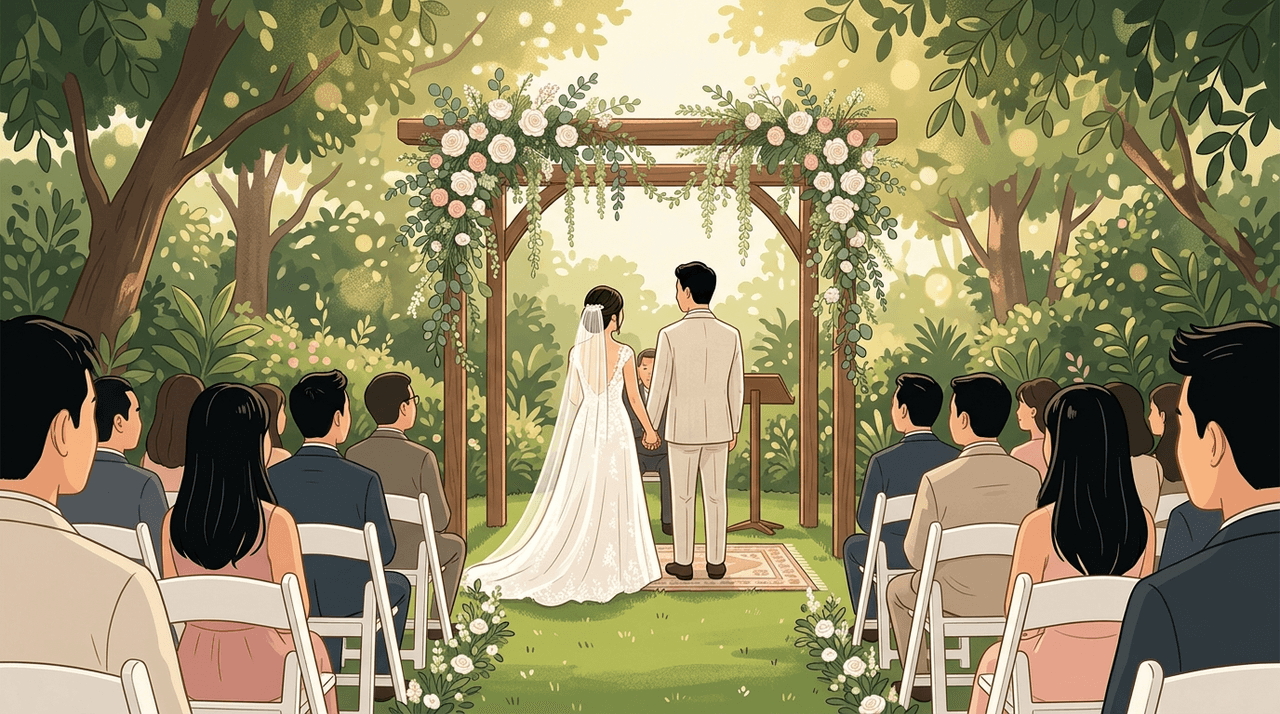
Cek realita: patahkan mitos budget
Pernikahan Outdoor: Cantik, Tapi Persiapannya Dua Kali Lipat
Pernikahan outdoor menawarkan cahaya alami dan ruang terbuka, tapi semua yang di indoor tersedia standar (sound, lighting, toilet, parkir) harus diatur sendiri.

Pilih Format
Janji Pernikahan: Begini Cara Menulisnya
Tentukan dulu cara membacanya, menulis jadi jauh lebih mudah. Janji hanya butuh tiga hal. Dalam urutan ini, semuanya mengalir alami. Satu kenangan yang hanya kalian berdua yang tahu.

Ikuti Struktur Ini
Sambutan Pernikahan: Begini Cara Melakukannya
Apapun hubungannya, apapun nadanya, struktur 3 bagian sudah cukup. Total 2-3 menit sudah ideal. Lebih dari 5 menit, tamu kehilangan fokus.

No comments yet
Jadilah yang pertama berkomentar
Timeline adalah Peta Bersama Semua Vendor
Panduan Timeline Hari Pernikahan: Jadwal Jam per Jam yang Lengkap
Kalau rias wajah molor 30 menit, sesi foto pasangan ikut terlambat, prosesi masuk resepsi tertunda, dan katering mulai dingin. Satu timeline mencegah seluruh reaksi berantai ini. Hari pernikahanmu, dari awal rias hingga tarian terakhir, rata-rata membutuhkan 10-14 jam. Akad dan resepsi saja sudah 5-8 jam. Memetakan ini sebelumnya adalah satu-satunya cara agar semua vendor bisa menjalankan tugasnya tepat waktu.
Timeline adalah Peta Bersama Semua Vendor
Fotografer, DJ, dan katering semuanya harus bekerja dari dokumen yang sama
Banyak pasangan berasumsi hari H akan "mengalir secara alami" tanpa jadwal terperinci. Tapi di hari pernikahanmu, fotografer, DJ, katering, florist, dan tim rias semuanya beroperasi secara mandiri. Satu orang terlambat 15 menit memulai serangkaian keterlambatan.
Bagikan timeline final kepada semua vendor 2 minggu sebelum pernikahan. Satu email mencakup segalanya dan mencegah hampir semua kebingungan.
Persiapan: Bagian yang Paling Sering Molor
Alokasikan 45-75 menit per orang untuk rias
Bagian persiapan adalah yang paling sulit diprediksi. Rias pengantin wanita saja butuh 2-3 jam, dan setiap bridesmaid menambahkan 45-75 menit di atasnya.
Dengan enam orang atau lebih, dua penata rias pada dasarnya menjadi keharusan. Menjalankan rombongan besar dengan satu penata rias secara rutin mengakibatkan seseorang masih di kursi rias menit-menit sebelum akad dimulai.
Kalau kamu punya rombongan pengantin yang besar dan hanya satu penata rias, waktu mulaimu bisa pukul 5 atau 6 pagi. Hitung jumlah orang sebelum mengkonfirmasi jumlah penata rias.
Contoh Timeline Lengkap: Akad Pukul 16.00
Timing Akad
Konfirmasi waktu mulai dan durasi dengan penghulu/pastor sebelumnya
Tamu biasanya mulai duduk 30 menit sebelum akad dimulai. Cue musik, cue pencahayaan, dan pemasangan dekorasi florist semuanya harus selesai sebelum jendela waktu itu dibuka.
Durasi akad tergantung formatnya. Akad nikah umumnya 20-30 menit, sementara prosesi pernikahan dengan ritual adat lengkap seperti siraman atau midodareni bisa memakan waktu lebih panjang. Pastikan ini dengan penghulu atau pendeta lebih awal agar timelinemu jauh lebih akurat.
Rencanakan 45-75 menit total untuk foto grup rombongan pengantin dan foto formal keluarga secara gabungan. Mengirimkan shot list kepada fotografer sebelumnya menghilangkan waktu yang terbuang untuk mengumpulkan orang dan menentukan pengelompokan di tempat.
Alur Resepsi
DJ perlu tahu urutan acara sebelum hari pernikahan
Cocktail hour adalah saat pasangan menyelesaikan foto sementara tamu terhibur. Terlalu singkat dan tamu menjadi gelisah. Terlalu lama dan momen resepsi kehilangan momentum. 60 menit adalah target yang tepat.
Buffer Time adalah yang Benar-Benar Menyelamatkan Harimu
Bangun buffer 15-30 menit di setiap perpindahan
Tidak ada pernikahan yang berjalan persis sesuai jadwal. Sesuatu selalu butuh sedikit lebih banyak waktu dari yang direncanakan. Keterlambatan paling umum terjadi saat perpindahan lokasi, sesi foto keluarga, dan tahap akhir rias.
Tambahkan buffer 15-30 menit di antara setiap perpindahan besar. Kalau selesai lebih cepat dari jadwal, kamu mendapat napas lega. Kalau terlambat, buffer menyerapnya.
Tetapkan aturan pribadi: tamu tidak boleh menunggu lebih dari 30 menit di titik mana pun. Cocktail hour ada justru untuk memberi kamu waktu foto tanpa membuat tamu merasa terlupakan.
Emergency Kit: Yang Harus Siap di Hari H
Hal kecil menyelamatkan momen besar
Berikan emergency kit kepada satu bridesmaid terpercaya dan jadikan itu tanggung jawab mereka untuk membawanya. Pasangan tidak akan punya tempat untuk menyimpannya, jadi tentukan pemegangnya lebih awal.
Tanpa Timeline vs. Master Plan yang Siap
Pertanyaan yang Sering Diajukan
Checklist Timeline Hari Pernikahan
Artikel terkait: Panduan Lengkap Kontrak Vendor Pernikahan, Panduan Lengkap Musik Pernikahan
Postingan terkait
Lihat daftarCek realita: patahkan mitos budget
Pernikahan Outdoor: Cantik, Tapi Persiapannya Dua Kali Lipat
Pernikahan outdoor menawarkan cahaya alami dan ruang terbuka, tapi semua yang di indoor tersedia standar (sound, lighting, toilet, parkir) harus diatur sendiri.
Pilih Format
Janji Pernikahan: Begini Cara Menulisnya
Tentukan dulu cara membacanya, menulis jadi jauh lebih mudah. Janji hanya butuh tiga hal. Dalam urutan ini, semuanya mengalir alami. Satu kenangan yang hanya kalian berdua yang tahu.
Ikuti Struktur Ini
Sambutan Pernikahan: Begini Cara Melakukannya
Apapun hubungannya, apapun nadanya, struktur 3 bagian sudah cukup. Total 2-3 menit sudah ideal. Lebih dari 5 menit, tamu kehilangan fokus.
No comments yet
Jadilah yang pertama berkomentar